Tar Village, Ladakh: Discover India's Award-Winning Hidden Gem for Responsible Tourism
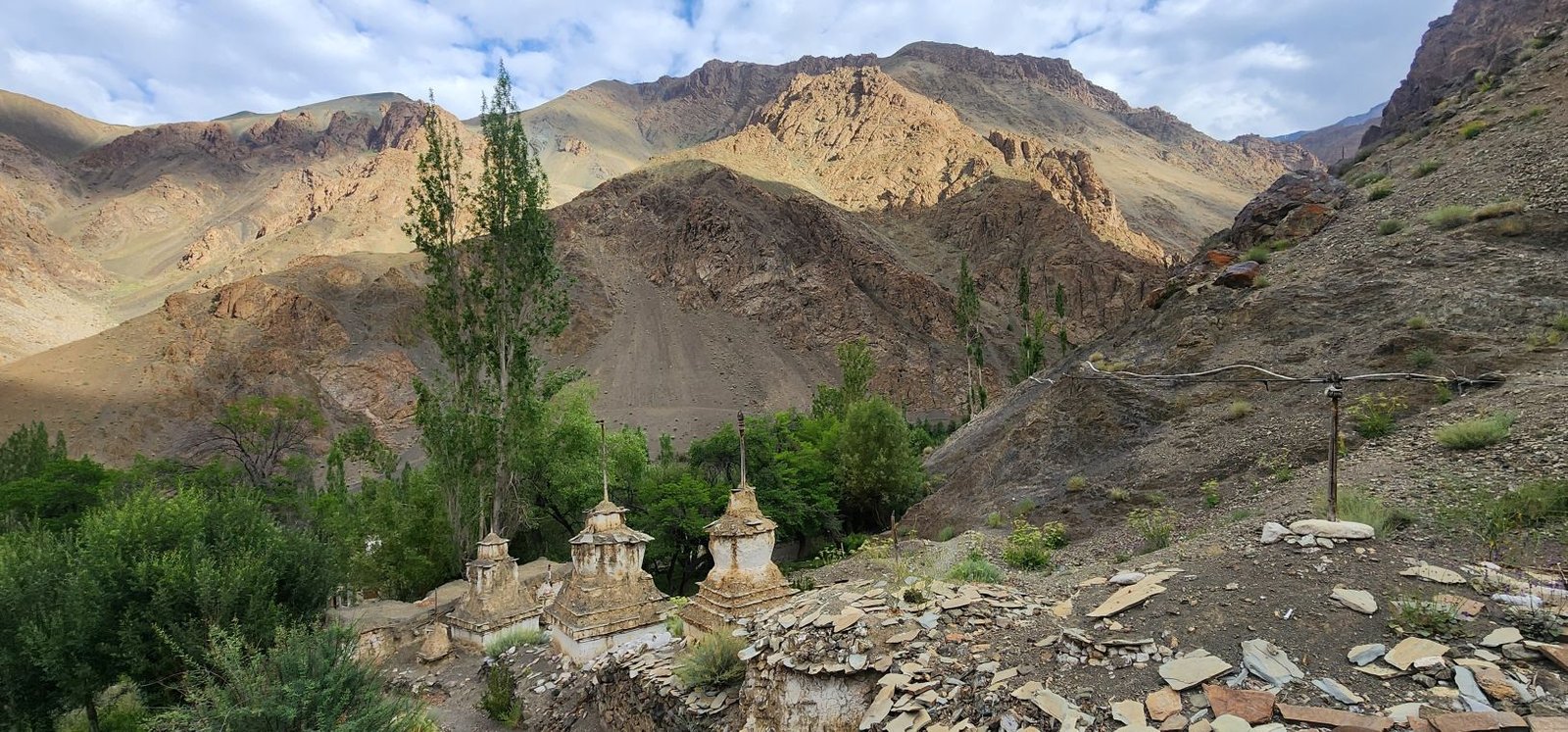
There are places you visit because they appear on every travel brochure, and then there are places that quietly find their way into your heart. They don't have luxury hotels, bustling cafés or souvenir markets. Instead, they offer something far more valuable—authenticity.
Tar Village in Ladakh is one such place.
Although I have visited Tar Village several times over the years, every visit teaches me something new. Every season paints a different picture, every family has another story to share, and every walk through its narrow pathways reminds me why I fell in love with the Himalayas more than two decades ago.
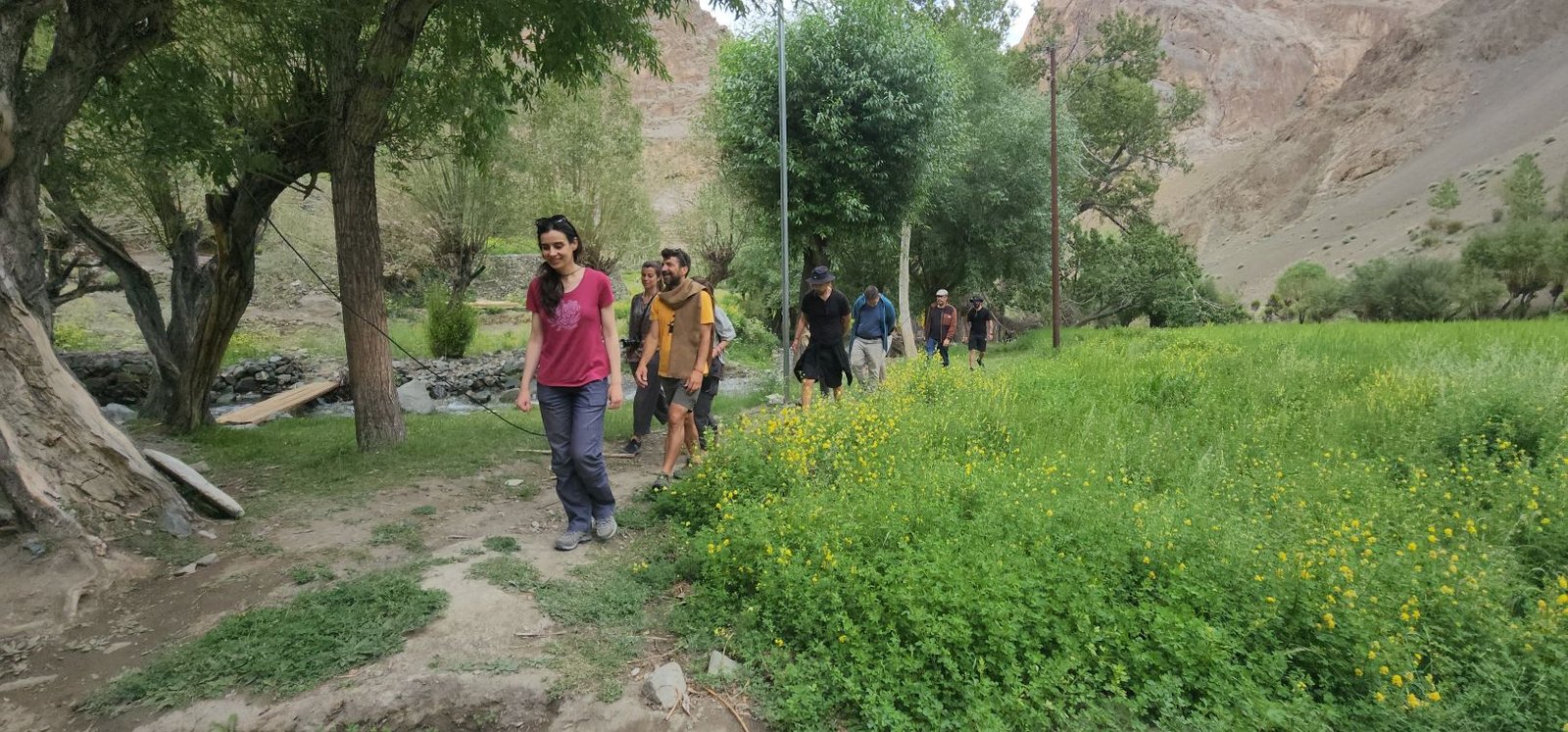
Most recently, I had the privilege of visiting Tar Village with a wonderful group of ten travellers from Portugal during one of our immersive Ladakh journeys organised by Summit Safari India. Little did they know that the next twenty-four hours would become one of the highlights of their entire journey through Ladakh.
Where the Road Ends, the Real Journey Begins
Unlike many villages in Ladakh, Tar cannot simply be reached by driving to its doorstep. Leaving the main Leh–Lamayuru highway in the Sham Valley near Nurla, our vehicles finally came to a halt beside a gentle mountain stream. This small parking area marked the end of the road—and the beginning of our walk into the hidden village of Tar.
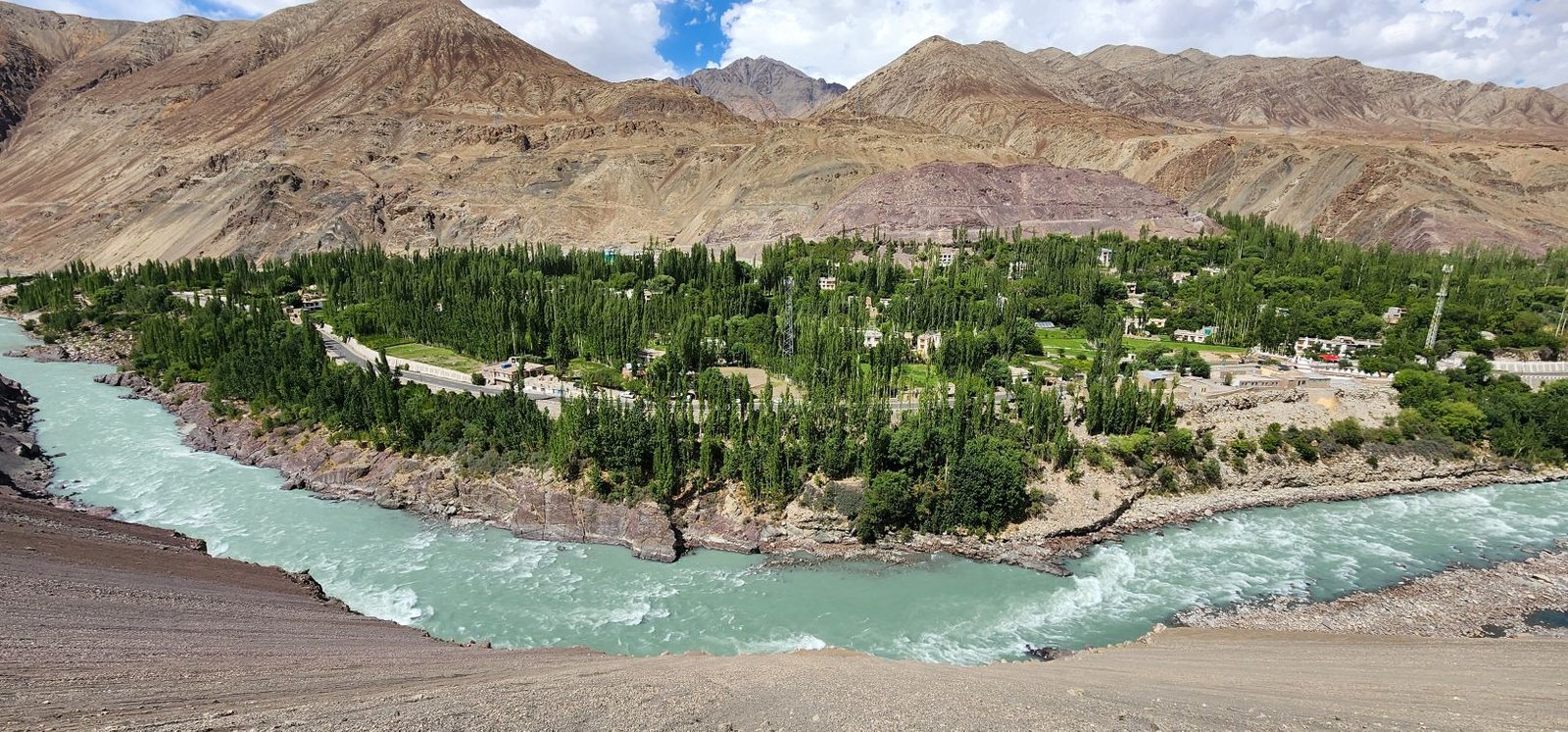
From there, everyone shouldered their daypacks, took a deep breath of the fresh mountain air and began walking. The trail gently follows a sparkling mountain stream before gradually climbing towards the village. The walk is around 30 minutes and involves a moderately steep ascent, but it is by no means difficult. Rather, it is the perfect introduction to a place that has deliberately remained untouched by mass tourism.
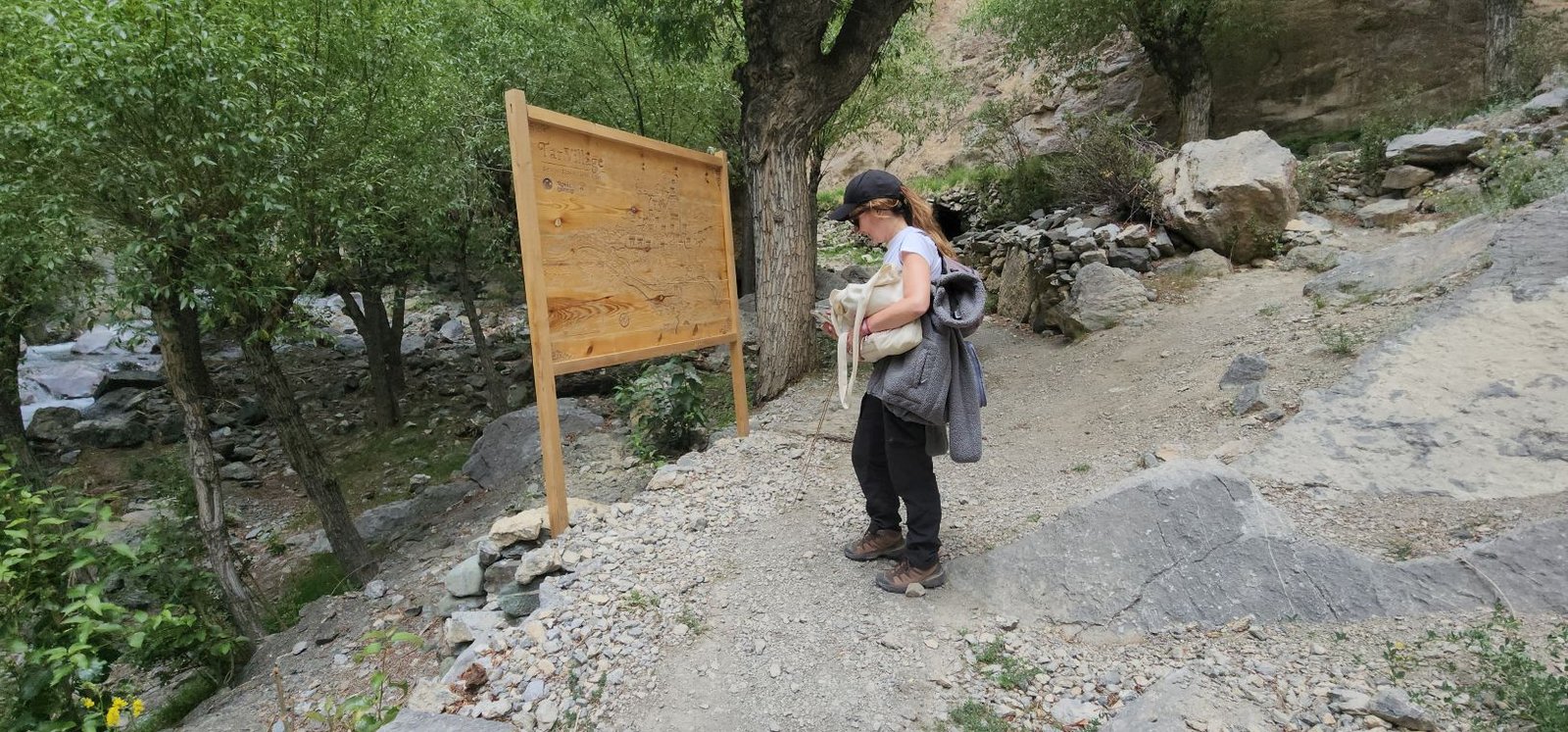
As we climbed steadily through the narrow gorge, following the crystal-clear mountain stream, the sounds of the outside world gradually faded away. Colourful prayer flags fluttered gently in the cool mountain breeze, while tiny waterfalls tumbled over smooth rocks, their soothing murmur filling the valley. With every step, the air felt fresher, the silence deeper, and the landscape more captivating. It was as if the mountains were inviting us to leave behind the pace of modern life and step into a place where nature, tradition, and time exist in perfect harmony.
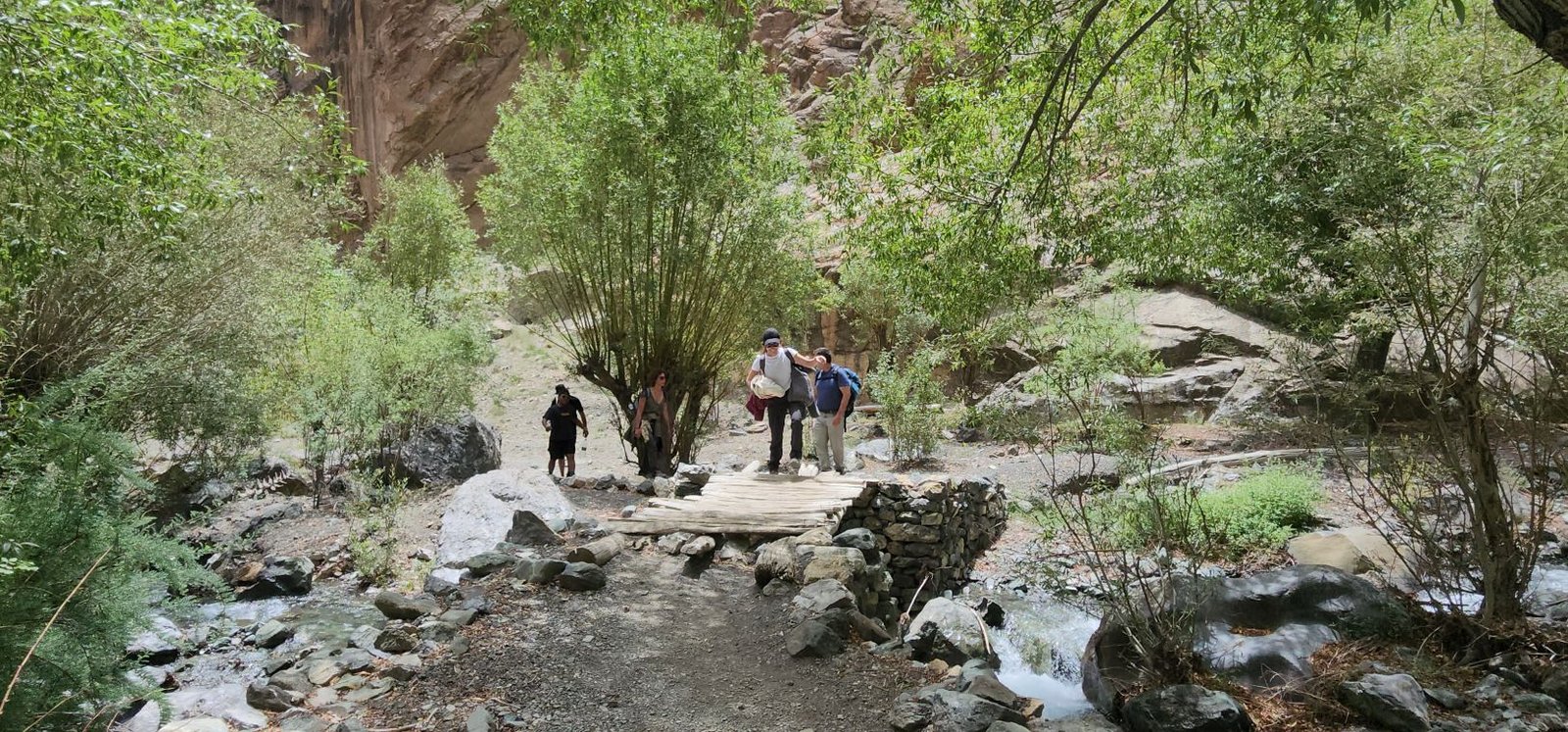
My Portuguese guests stopped every few minutes—not because the climb was difficult, but because another picture-perfect scene unfolded around every bend. Cameras came out, conversations paused, and everyone simply stood in quiet admiration of the landscape before us.
One of them turned to me with a smile and asked, "Is this really still Ladakh?"
I smiled back and nodded.
"Yes," I replied. "But this is a side of Ladakh that very few travellers ever have the privilege to experience."
A Village Where Time Stands Still
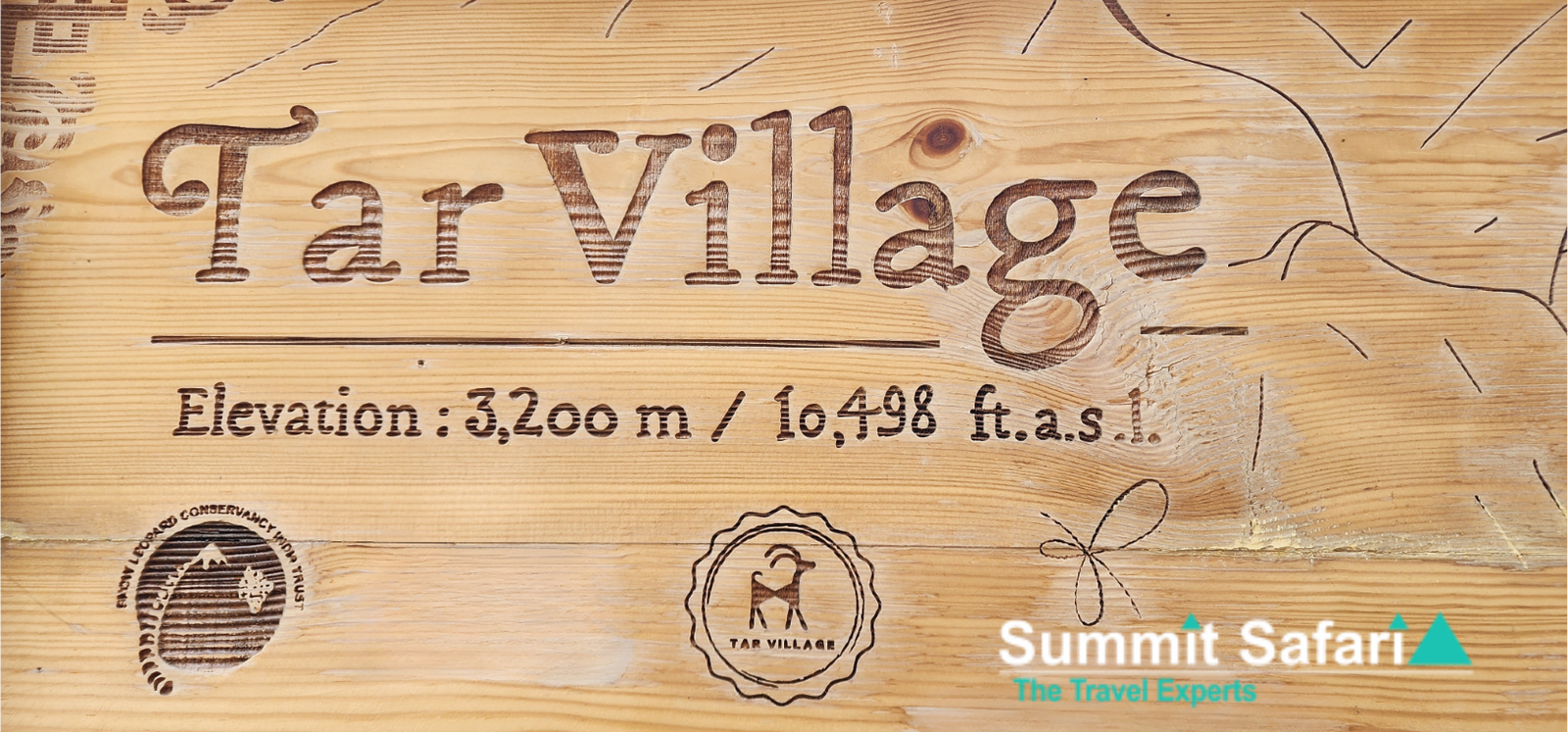
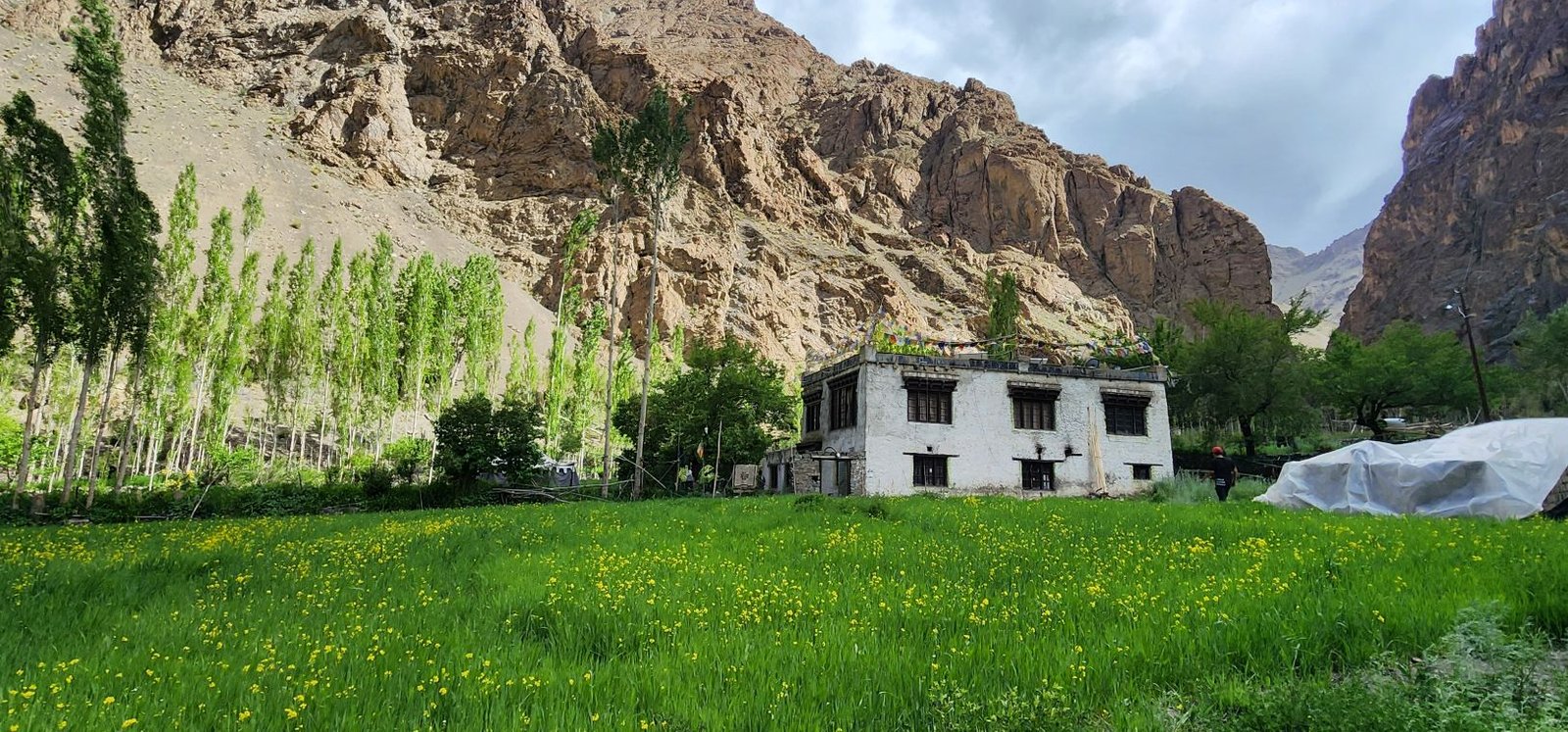
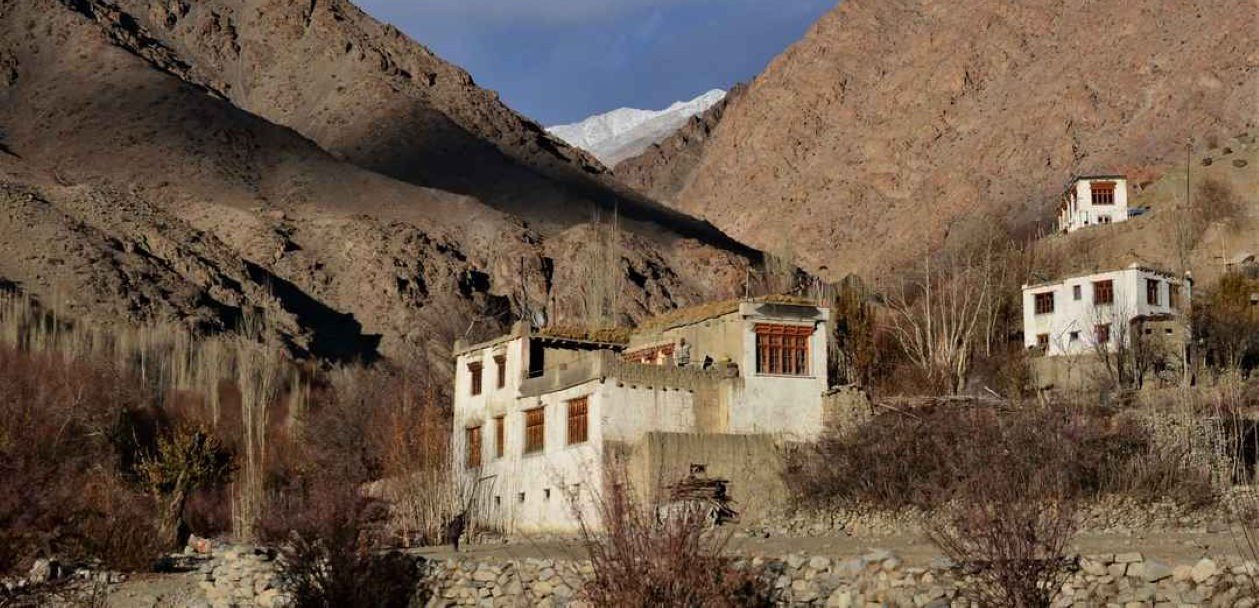
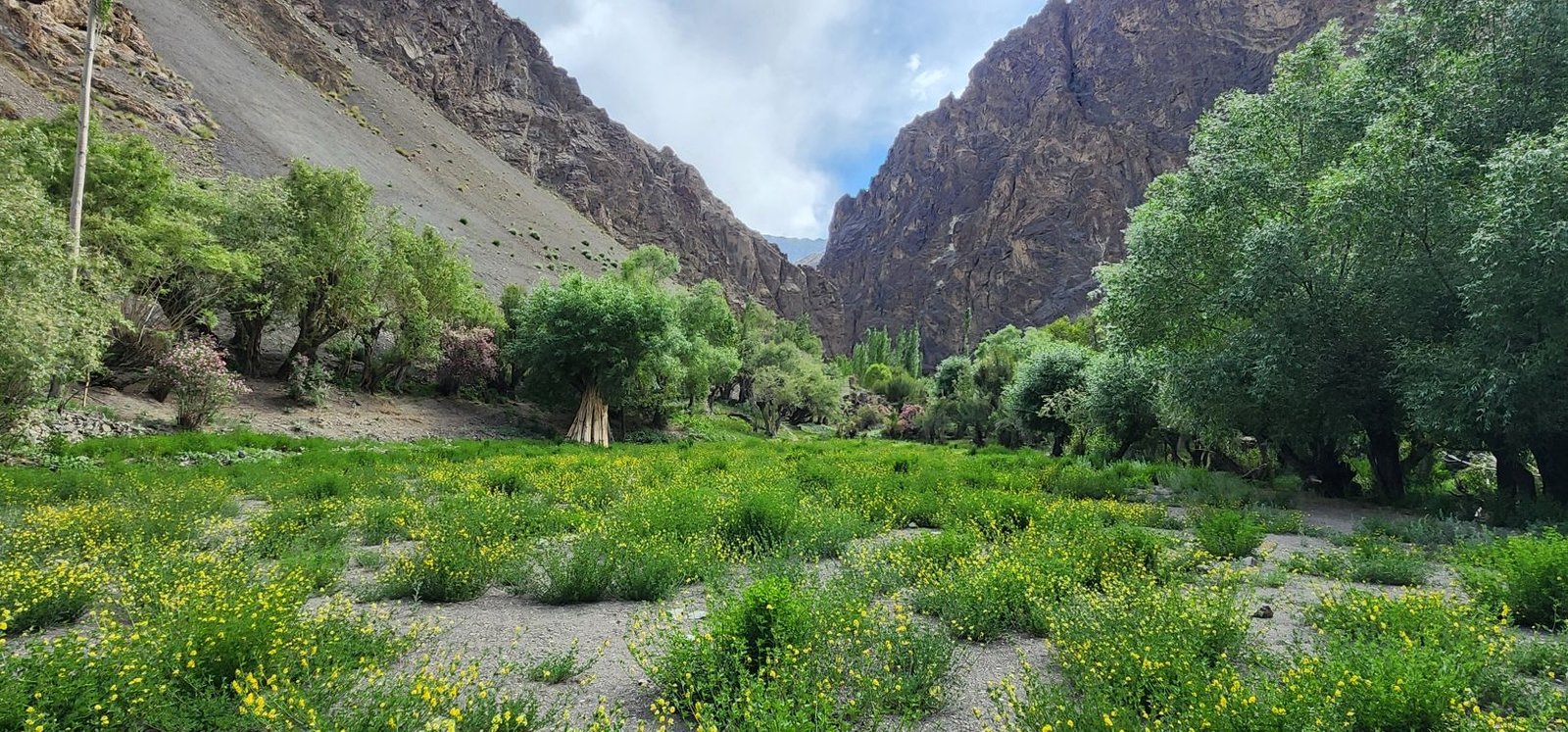
The first glimpse of Tar Village never fails to surprise visitors. After walking through an otherwise barren mountain landscape, a green oasis suddenly appears. Traditional mud and stone houses are surrounded by barley fields, willow trees and apricot & walnut orchards. Water channels, carefully maintained for generations, carry glacier-fed water to every field.
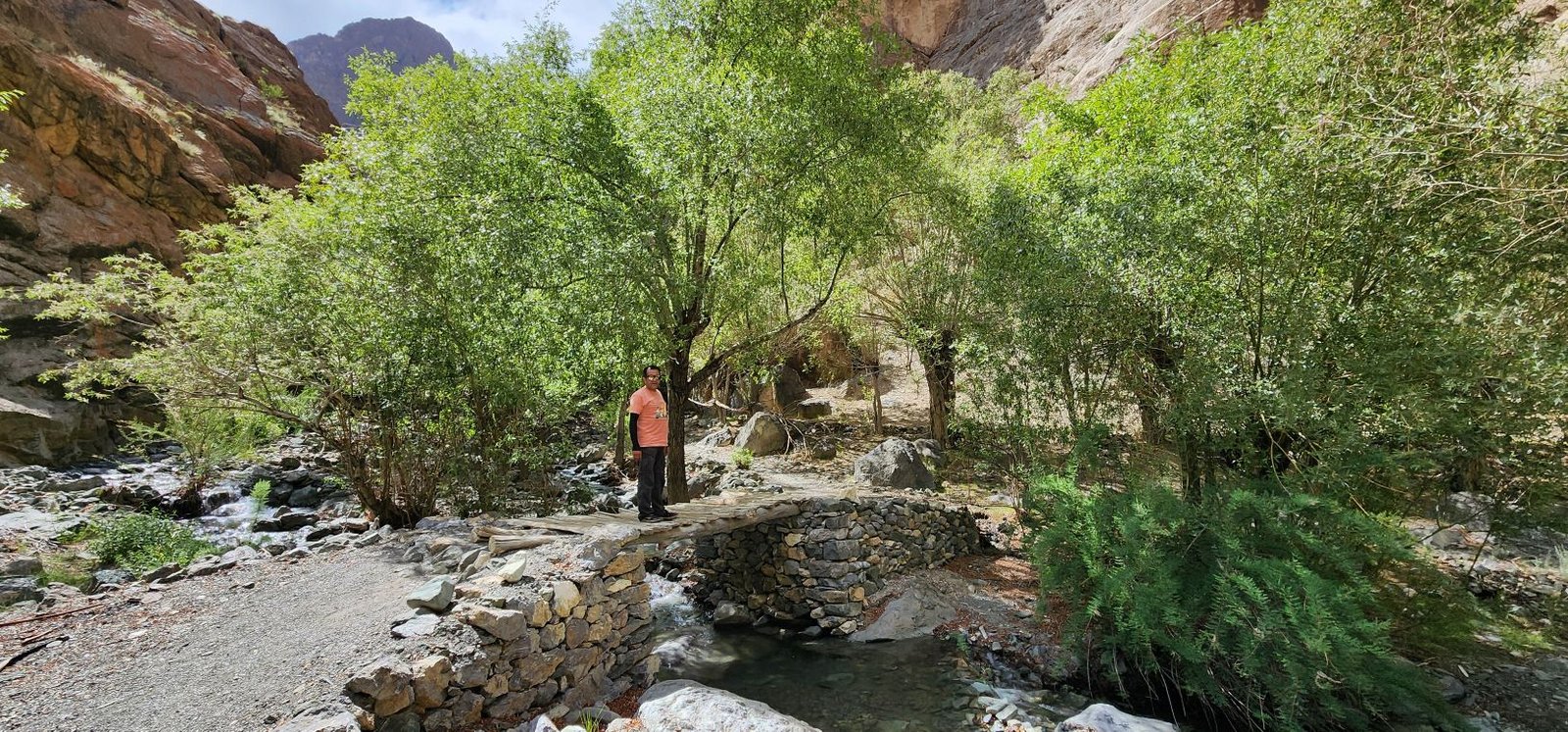
Time seems to slow down. There are no noisy traffic jams, no souvenir stalls, no luxury resorts and no crowds. The only sounds were the soft bells of grazing sheep and dzos, the occasional moo of a cow, and the gentle creak of the village prayer wheel turning in the breeze. As we wandered through the narrow lanes, villagers greeted us with warm smiles. It felt as though time moved a little more slowly here.There were no crowds, no traffic, and no distractions—only the simple rhythm of village life, unfolding as it has for generations.
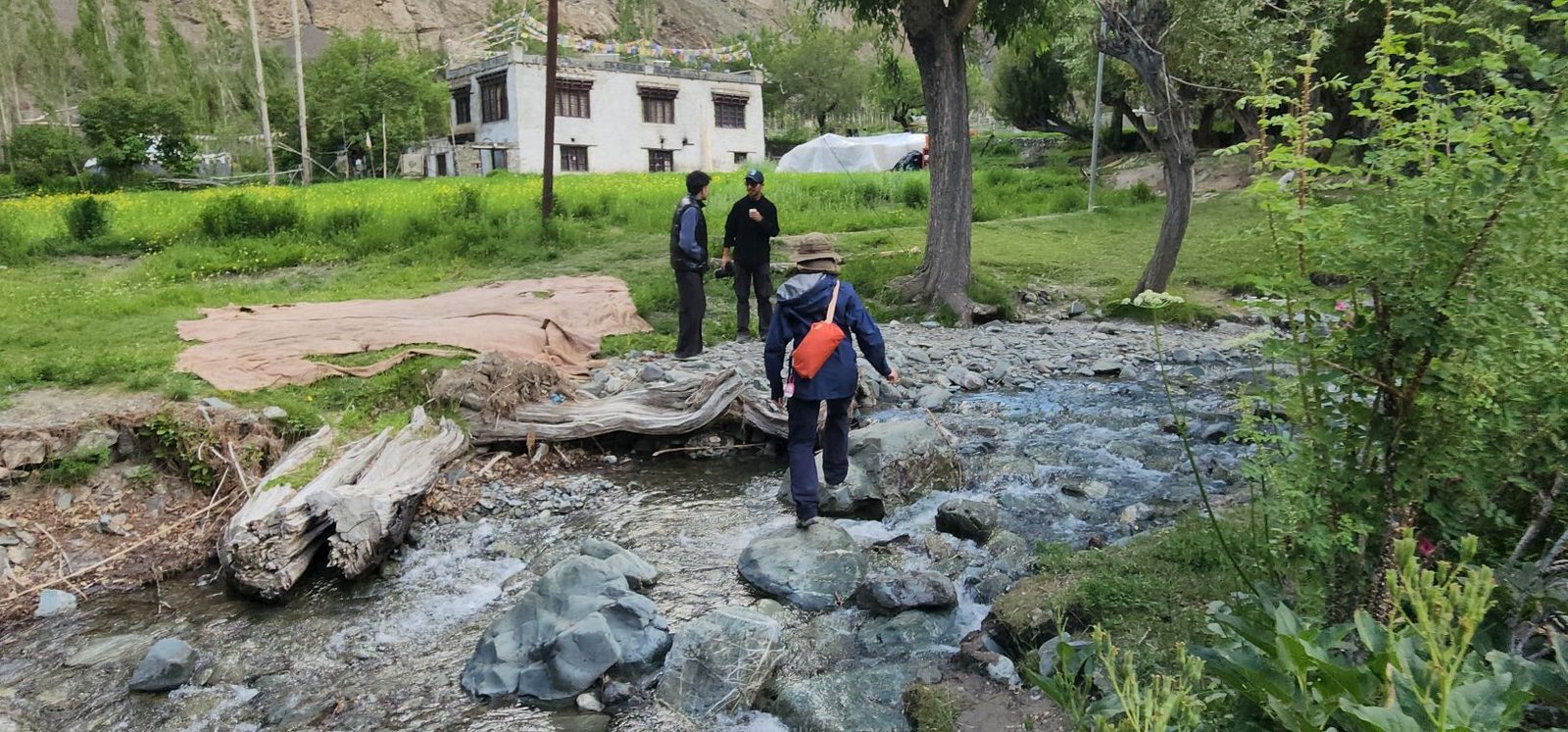
It is this authenticity that makes Tar Village one of Ladakh's finest examples of responsible tourism. Here, tourism doesn't change the village; instead, the village invites travellers to become, even if only for a short while, a part of its enduring way of life. In recognition of its outstanding efforts towards sustainable and community-based tourism, Tar Village was honoured as one of India's Award-Winning Villages for Responsible Tourism, proving that tourism can preserve culture while improving local livelihoods.
A Warm Welcome That Money Cannot Buy
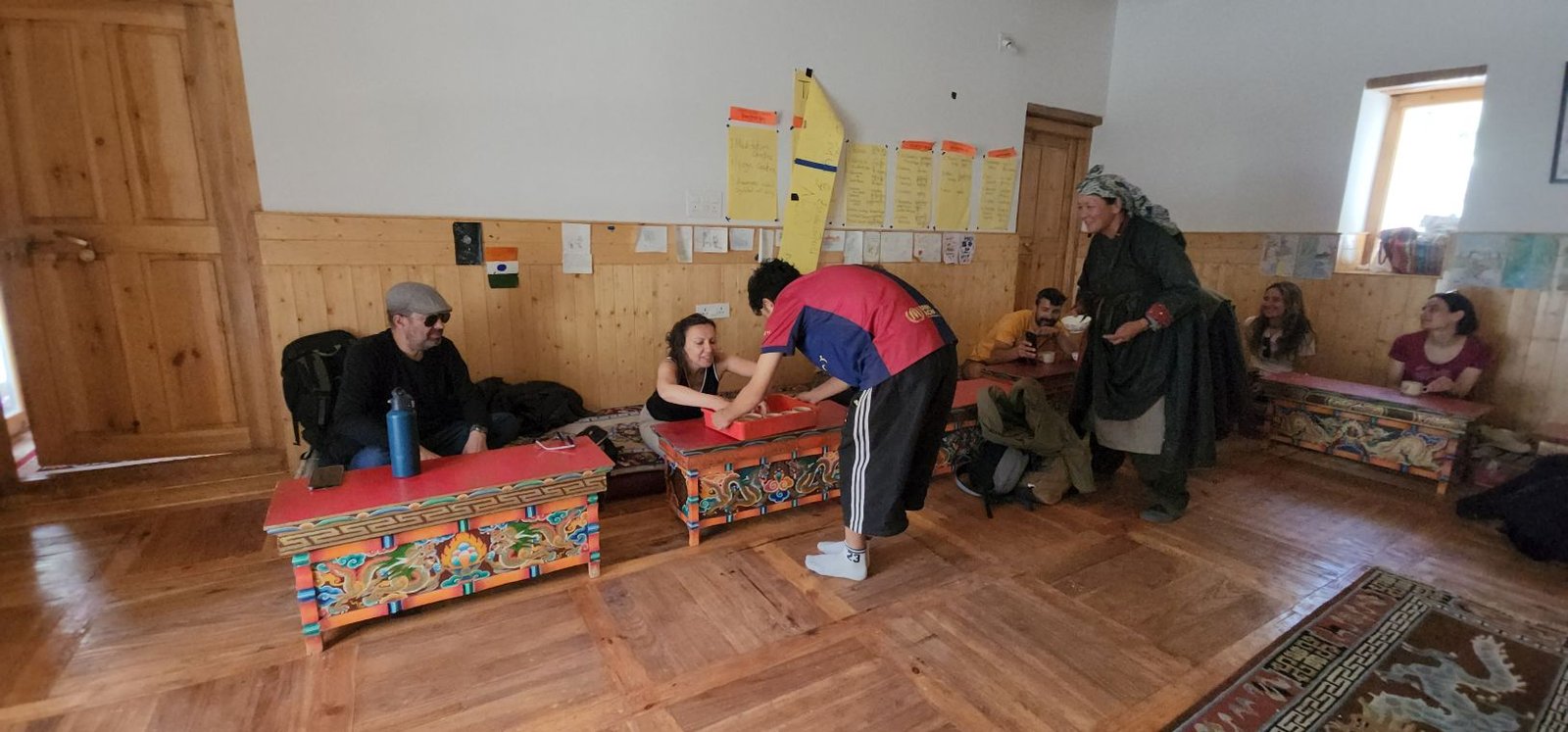
As we entered the village, we were welcomed at the community hall by smiling villagers. Our hosts had already gathered to receive us. Warm greetings were exchanged over cups of tea while everyone introduced themselves.
There was no formal hotel check-in.
No reception desk.
No room keys.
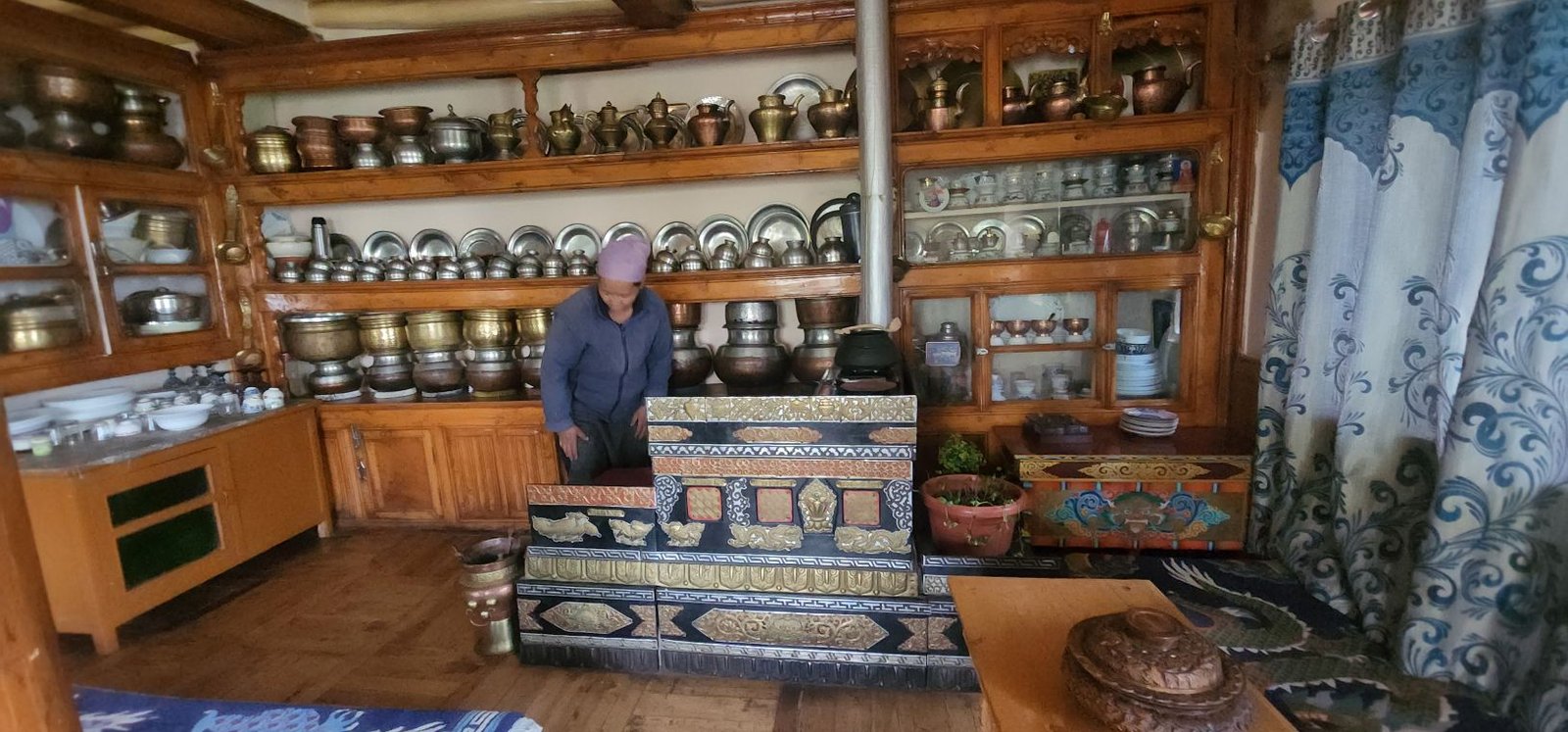
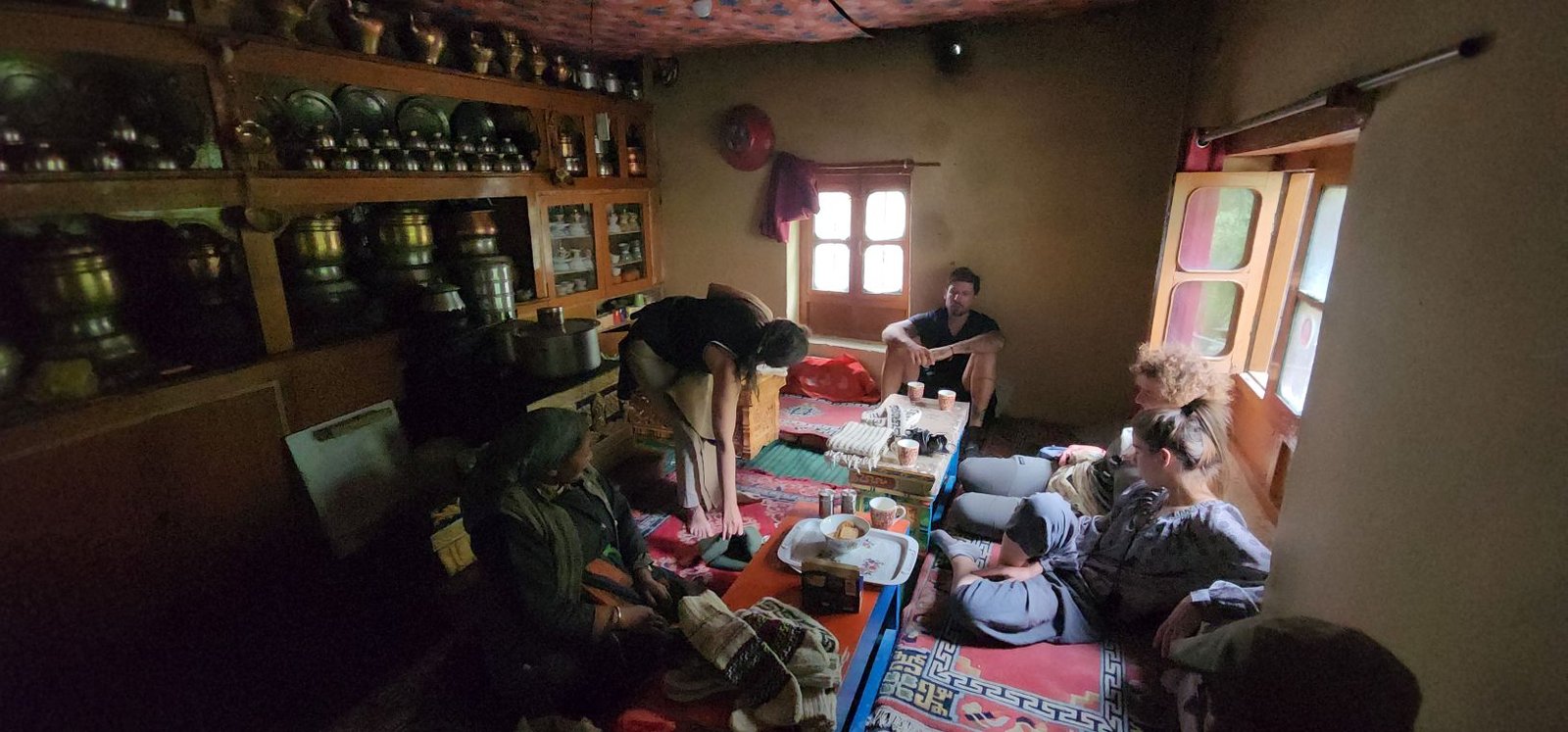
Instead, each host family assisted us and warmly welcomed two of our guests into their own home. Within a few minutes, our group had become part of the village. Watching this unfold is always one of my favourite moments. For many travellers, this is the first time they truly experience what community-based tourism means.
They are not customers - They are guests and soon becomes family.
Living Like a Ladakhi Family
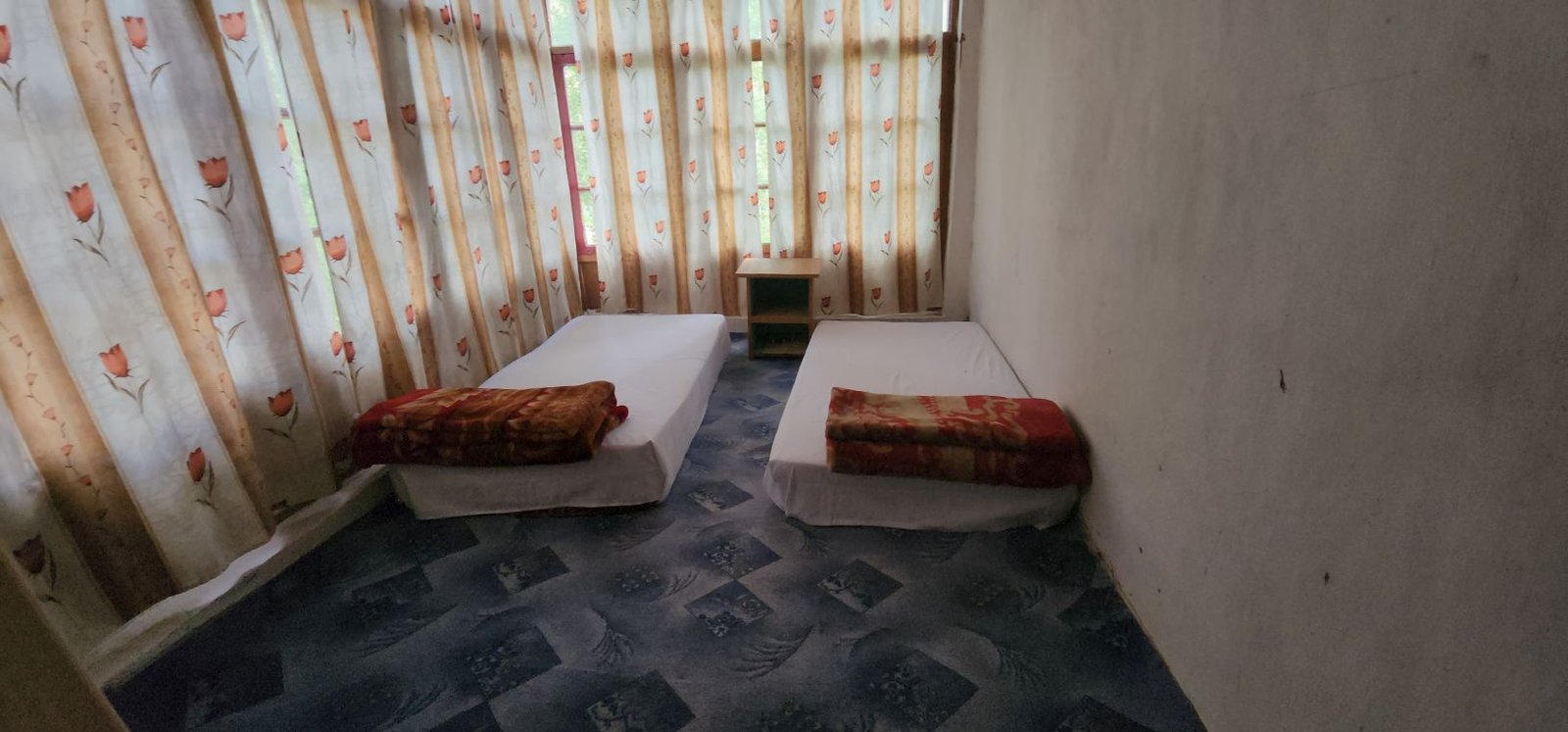
Accommodation in Tar Village is intentionally simple. Each traditional Ladakhi home generally offers one guest room. The rooms are clean and comfortable, with double or twin beds, warm blankets, and locally woven carpets that reflect generations of Ladakhi craftsmanship.
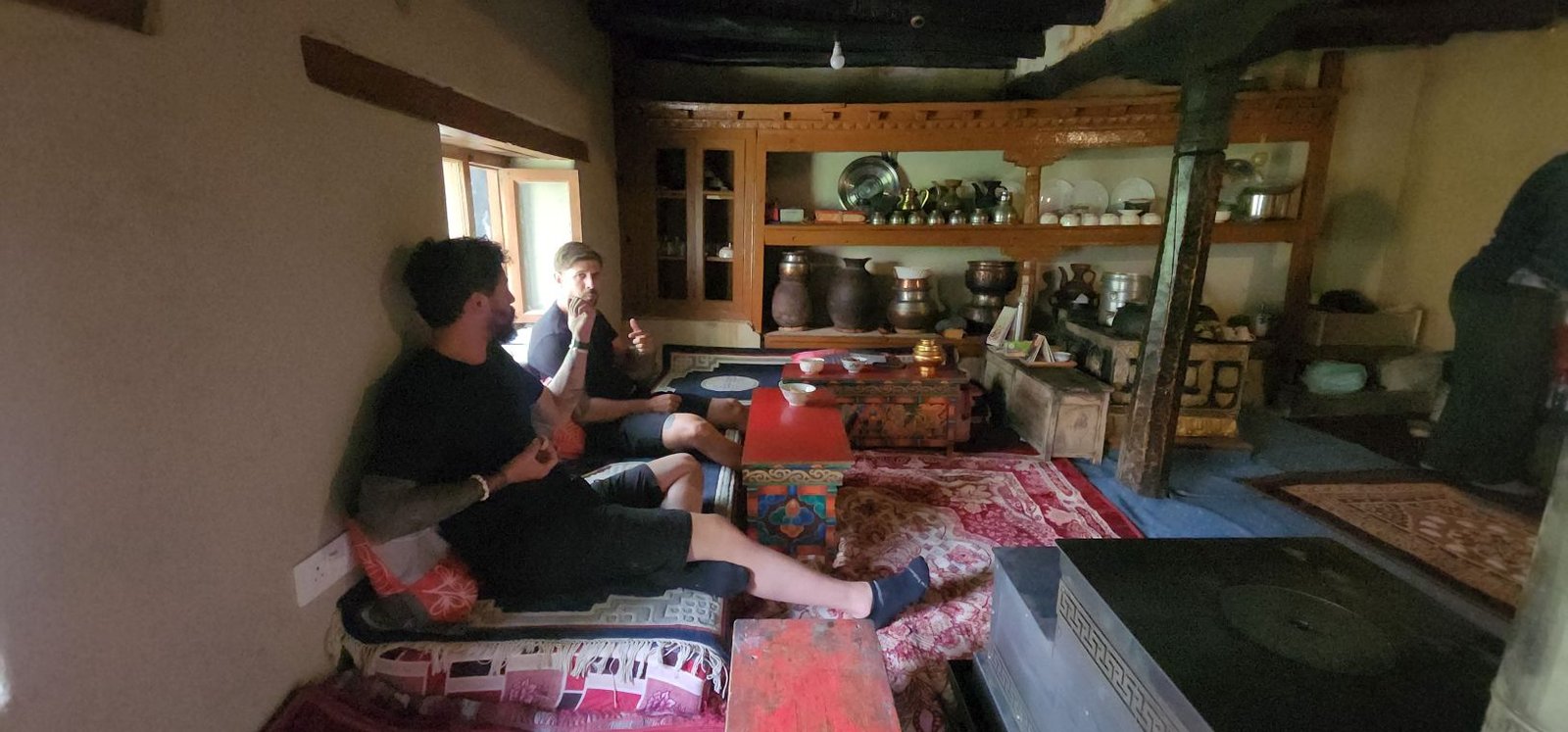
The toilets are traditional dry pit toilets—an environmentally sustainable system that has been used in the Himalayas for centuries. Hot water for showers is not available, so be prepared to embrace the simple lifestyle of this remote Himalayan village. While basic by urban standards, these homes beautifully demonstrate how local communities have adapted to life in this high-altitude desert.
Visitors quickly realise that luxury here is not measured by thread count or room service. Luxury is waking up to birdsong, the gentle murmur of mountain streams, and crisp Himalayan air instead of traffic and city noise. It is sharing home-cooked meals and stories with a local family, watching the Milky Way shine across an unpolluted night sky, and sipping a cup of butter tea as the first rays of sunlight illuminate the surrounding peaks.
Above all, the greatest luxury is slowing down, reconnecting with nature and local culture, and arriving as a guest but leaving feeling like part of the family.
Lunch with Our Hosts
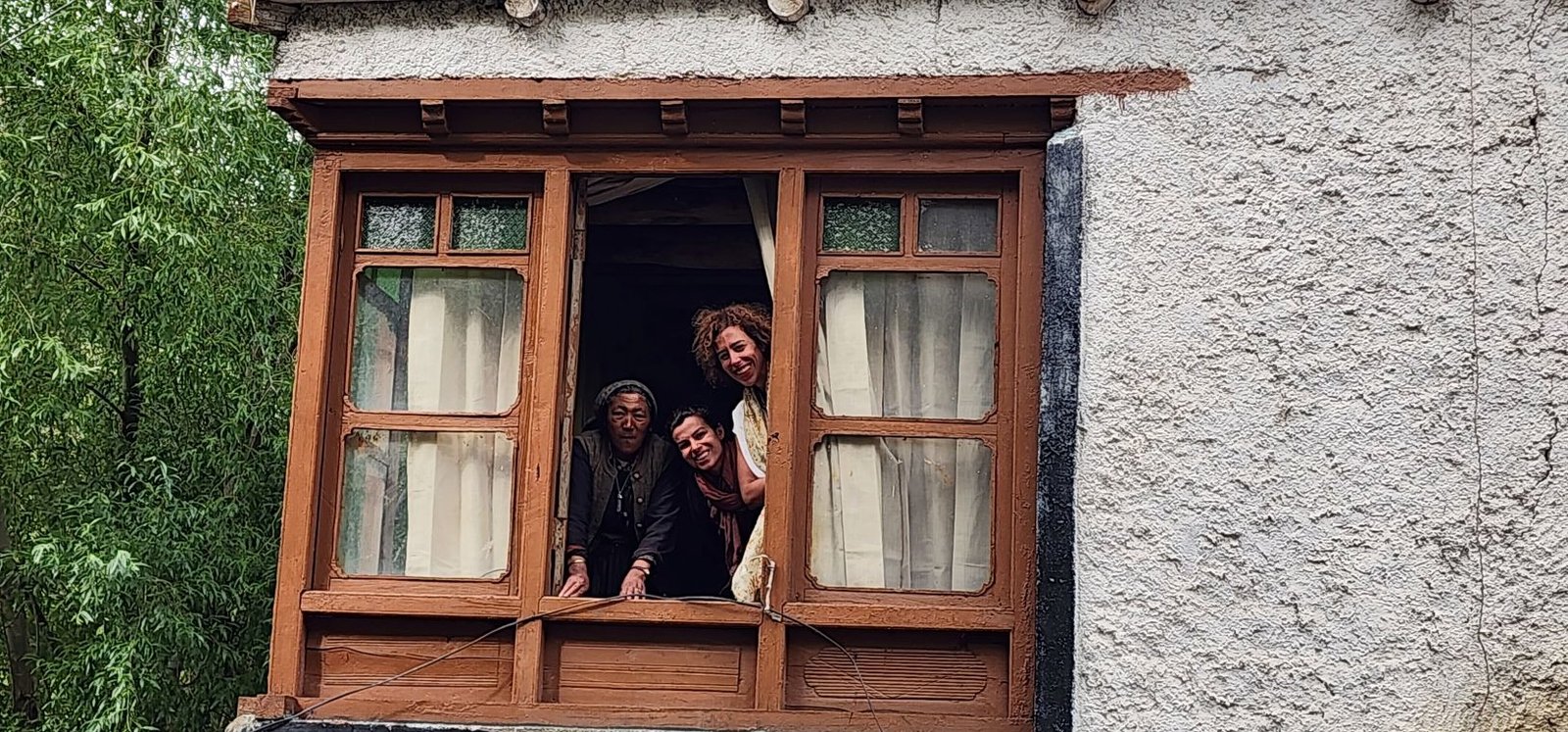
Soon after settling into our respective homes, the delicious aromas of lunch drifted from the kitchens. Our hosts prepared a wholesome meal using fresh ingredients grown in Tar Village. Lunch typically included rice, lentils, and locally grown seasonal vegetables. As each family cooked in their own home, every guest enjoyed a slightly different menu, making each meal unique.
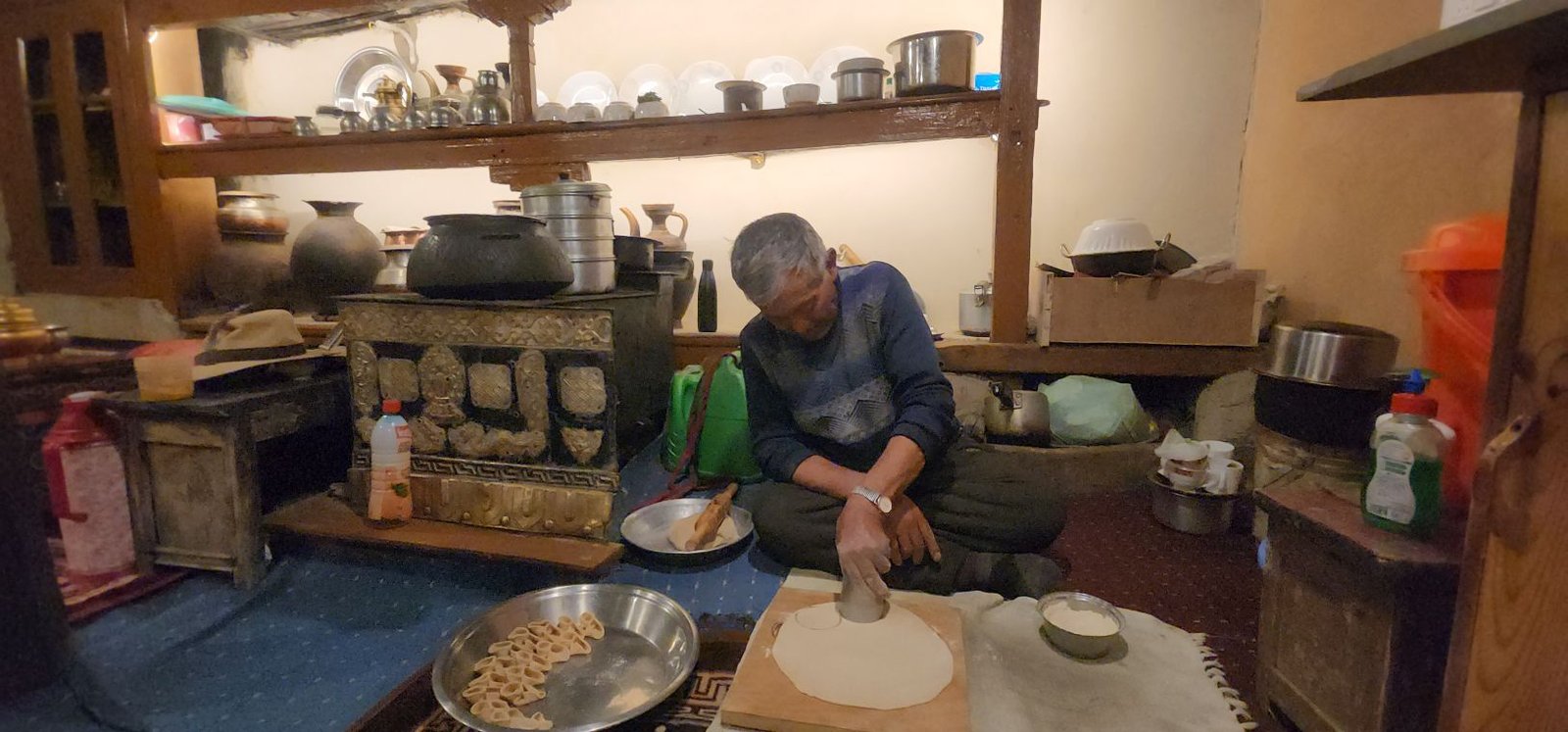
The food was simple, fresh, and full of flavour—honest home-cooked dishes served with genuine warmth. Meals in Tar Village are never rushed. They are a time to slow down, share stories, and connect. As we ate together, our hosts spoke about farming, raising livestock, the long Himalayan winters, and the rhythms of village life.
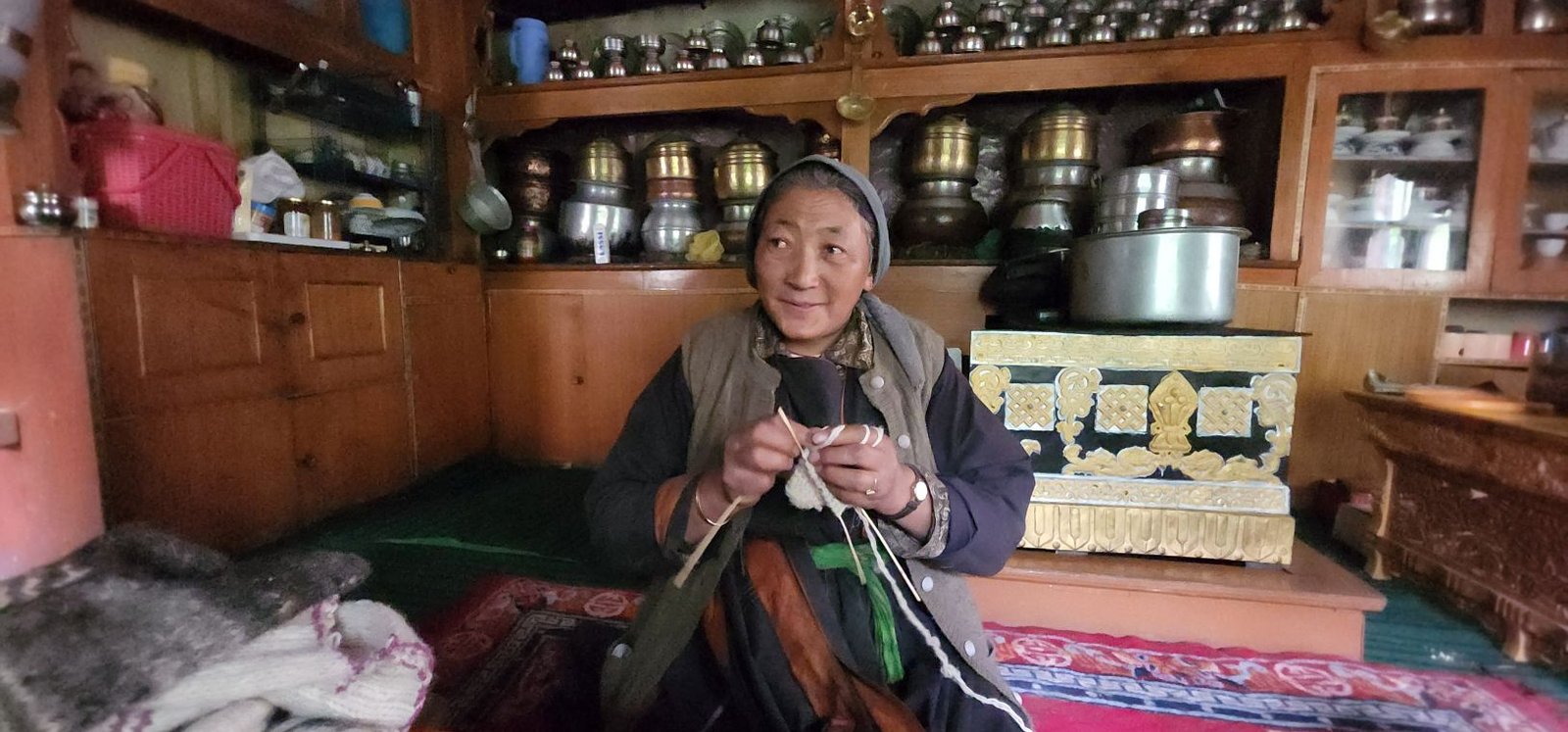
Although some of our hosts spoke little or no English, communication was effortless. A few conversations needed translation, but smiles, laughter, and warm hospitality needed none. It was a wonderful reminder that kindness is a universal language, understood far beyond words.
Yulsa – "The Spiritual Site" Where Our Village Walk Began
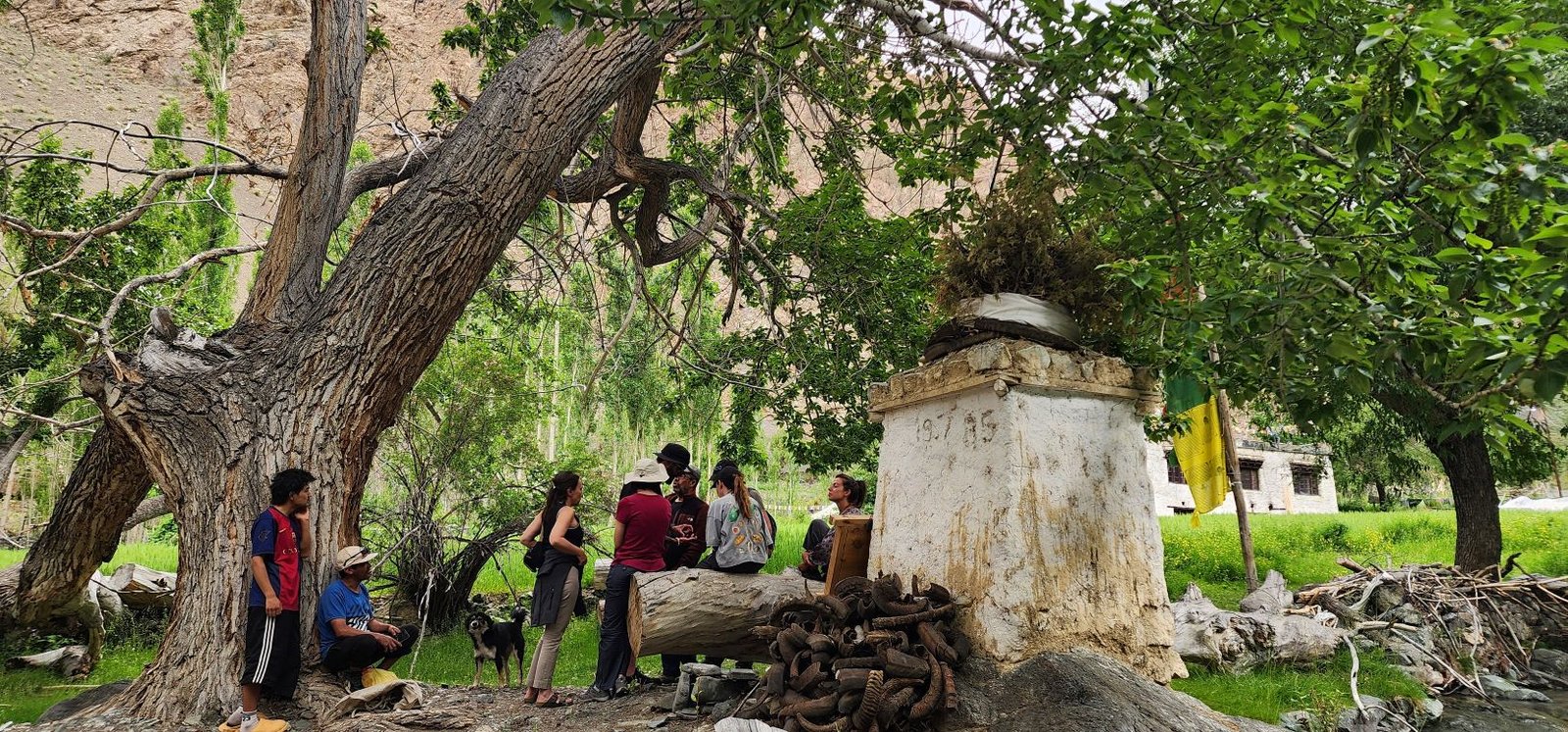
At around 4:00 p.m., we gathered with our local guide, Urgain, at the Yulsa, the sacred spiritual site and guardian of Tar Village. Before setting off, he invited us to pause for a few moments and explained why this humble shrine holds such an important place in the lives of the villagers.
Nestled beside a gently flowing mountain stream, the Yulsa is surrounded by an ancient Yarpa tree, while the horns of the Himalayan Snow Ibex adorn the sacred site, symbolising strength, protection, and the village's enduring connection with the surrounding mountains and wildlife.
Urgain explained that although the people of Tar are devoted Buddhists, the tradition of honouring the village guardian predates Buddhism. Over the centuries, these ancient beliefs became beautifully woven into Tibetan Buddhist culture, and even today villagers gather here to pray for good harvests, healthy livestock, the well-being of their families, and protection from misfortune.
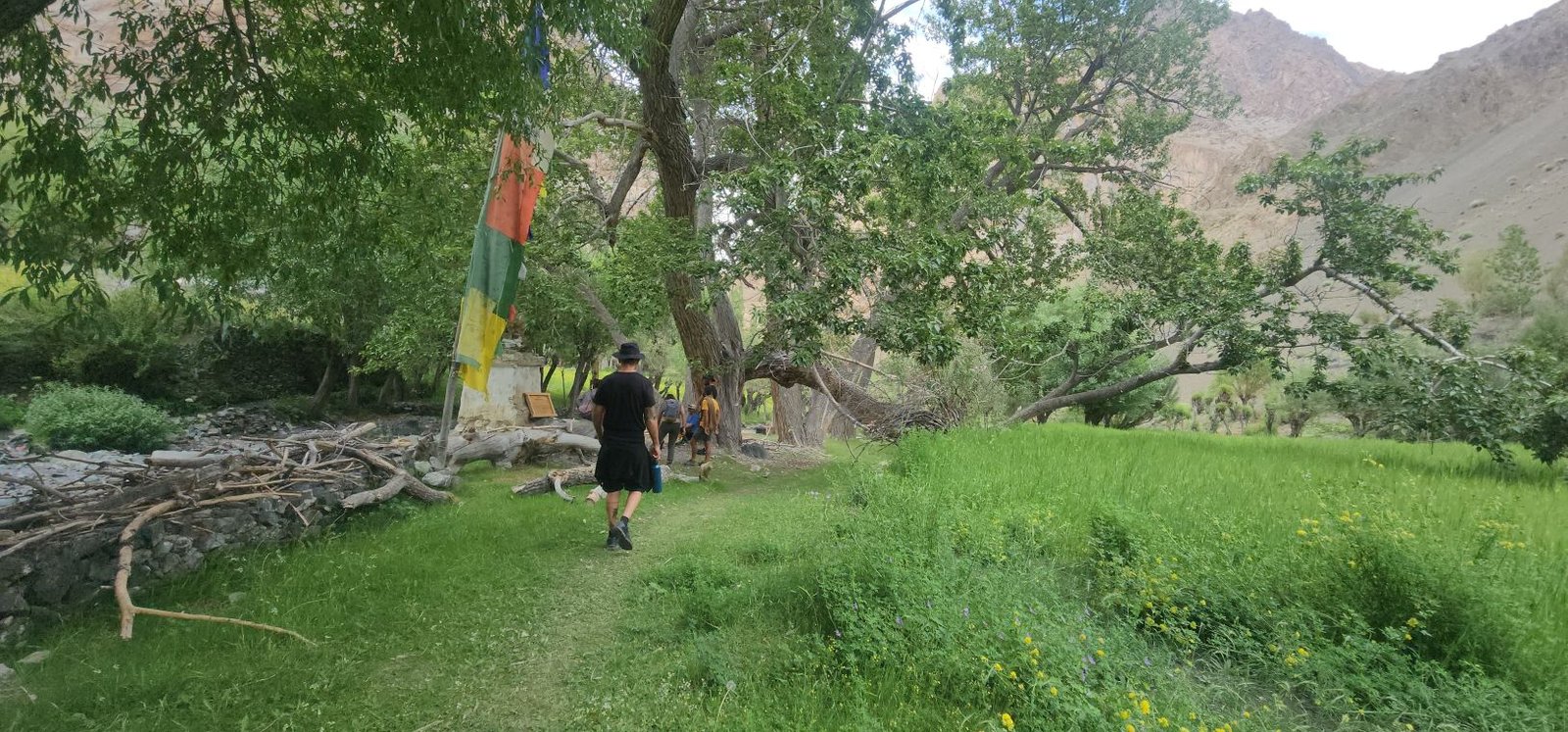
Colourful prayer flags fluttered gently in the mountain breeze as we stood quietly listening. It was a simple place, yet one filled with history, faith, and deep cultural meaning. There could not have been a more fitting place to begin our journey through Tar Village.
A Walk Through the Heart of Tar Village
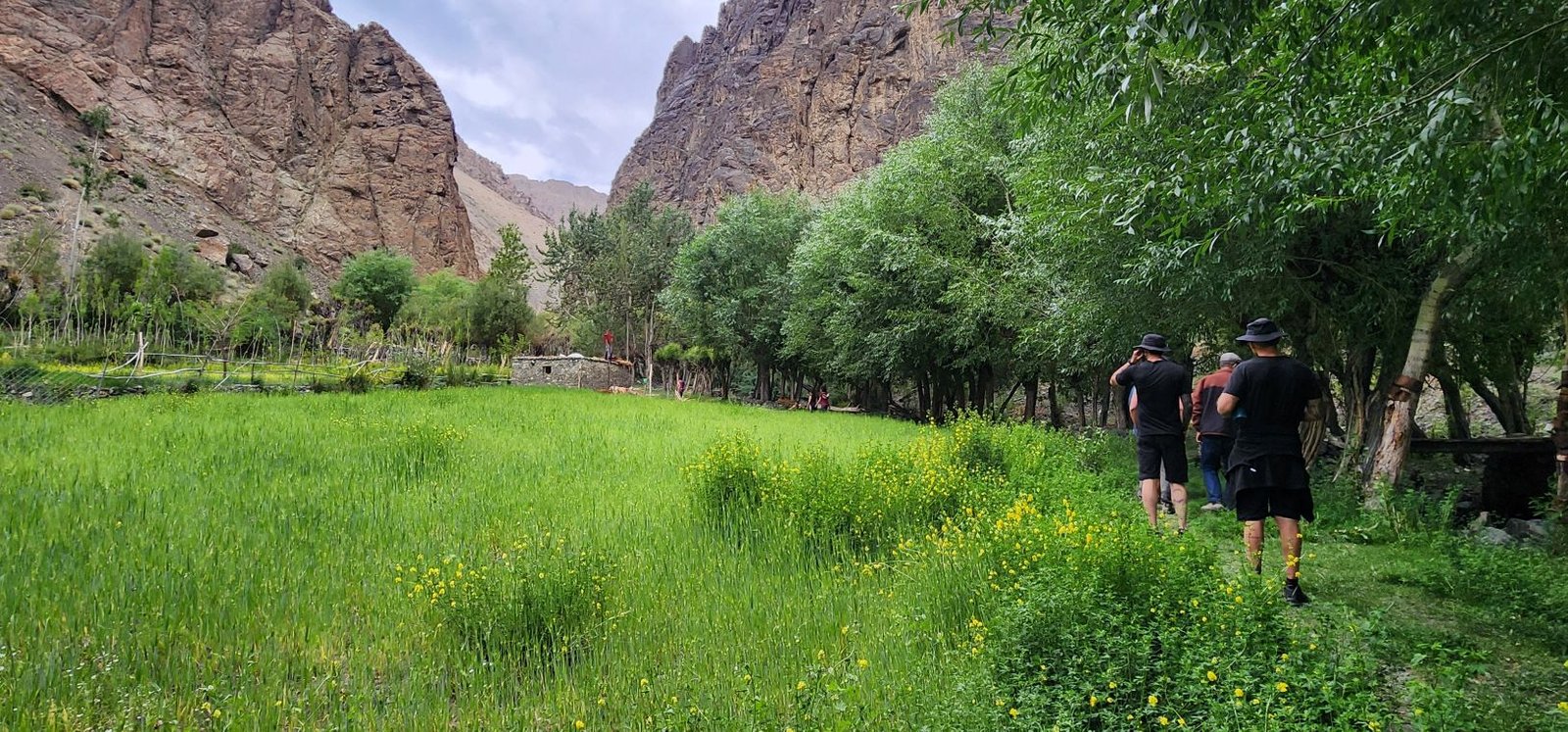
Leaving the Yulsa behind, we followed narrow footpaths through the village. There was no fixed sightseeing itinerary or famous landmarks to tick off. Instead, we experienced something far more meaningful—everyday life in Tar Village, just as it has been for generations.
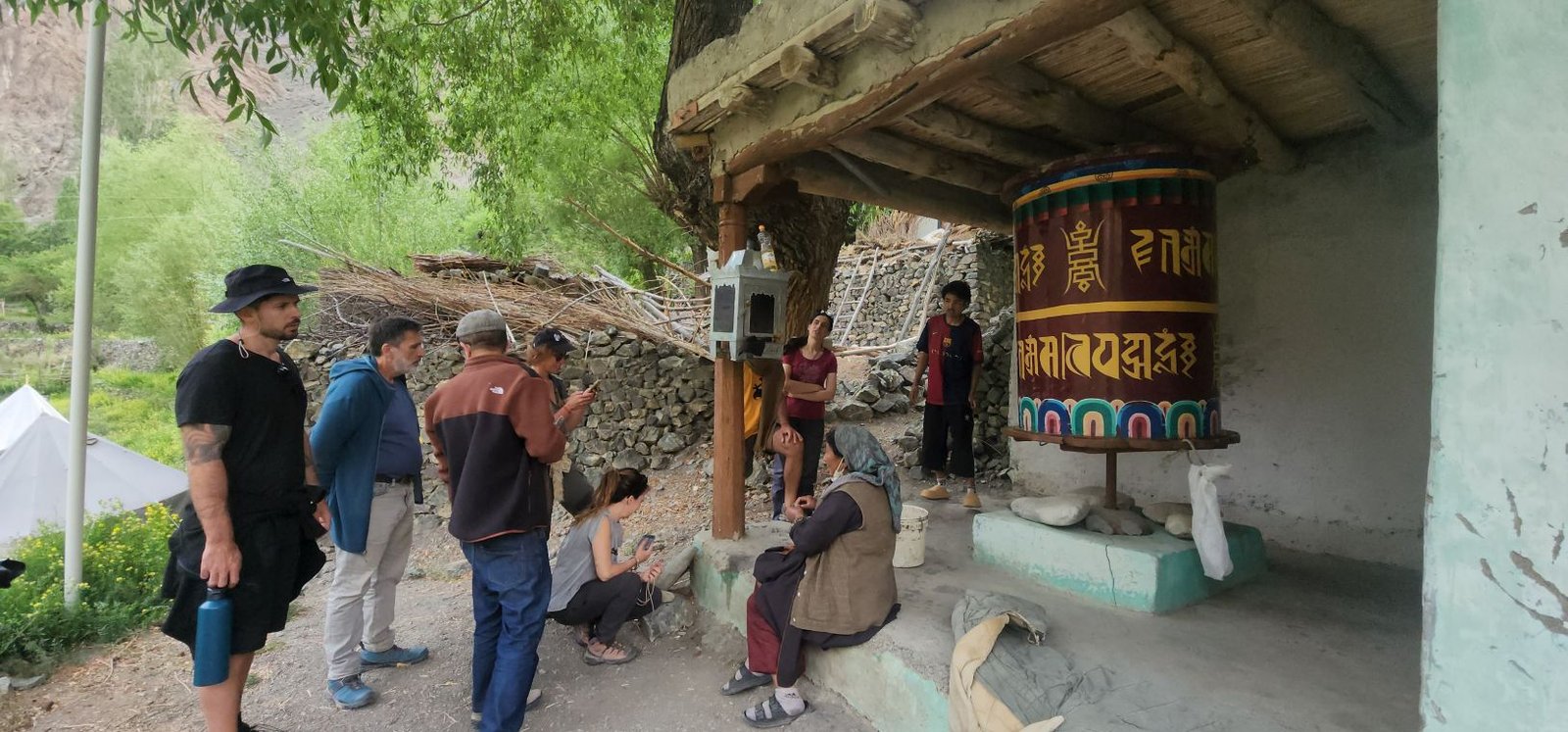
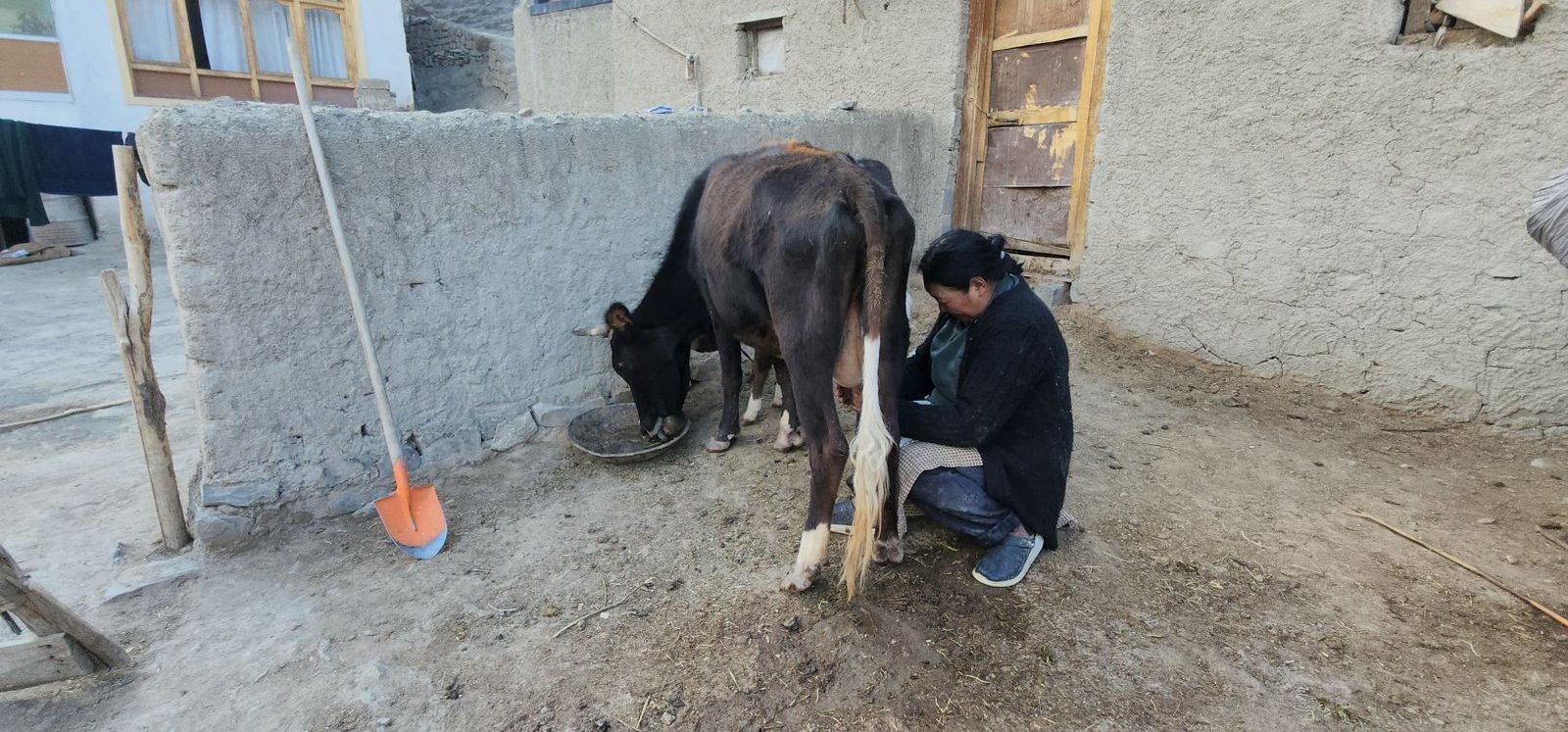
Men and women carried on with their daily routines. Some paused to light butter lamps at the village prayer wheel, while others milked their cows, cared for their livestock, or worked in the barley fields. Crystal-clear glacier water flowed through centuries-old irrigation channels, nourishing the fields as it has for generations.
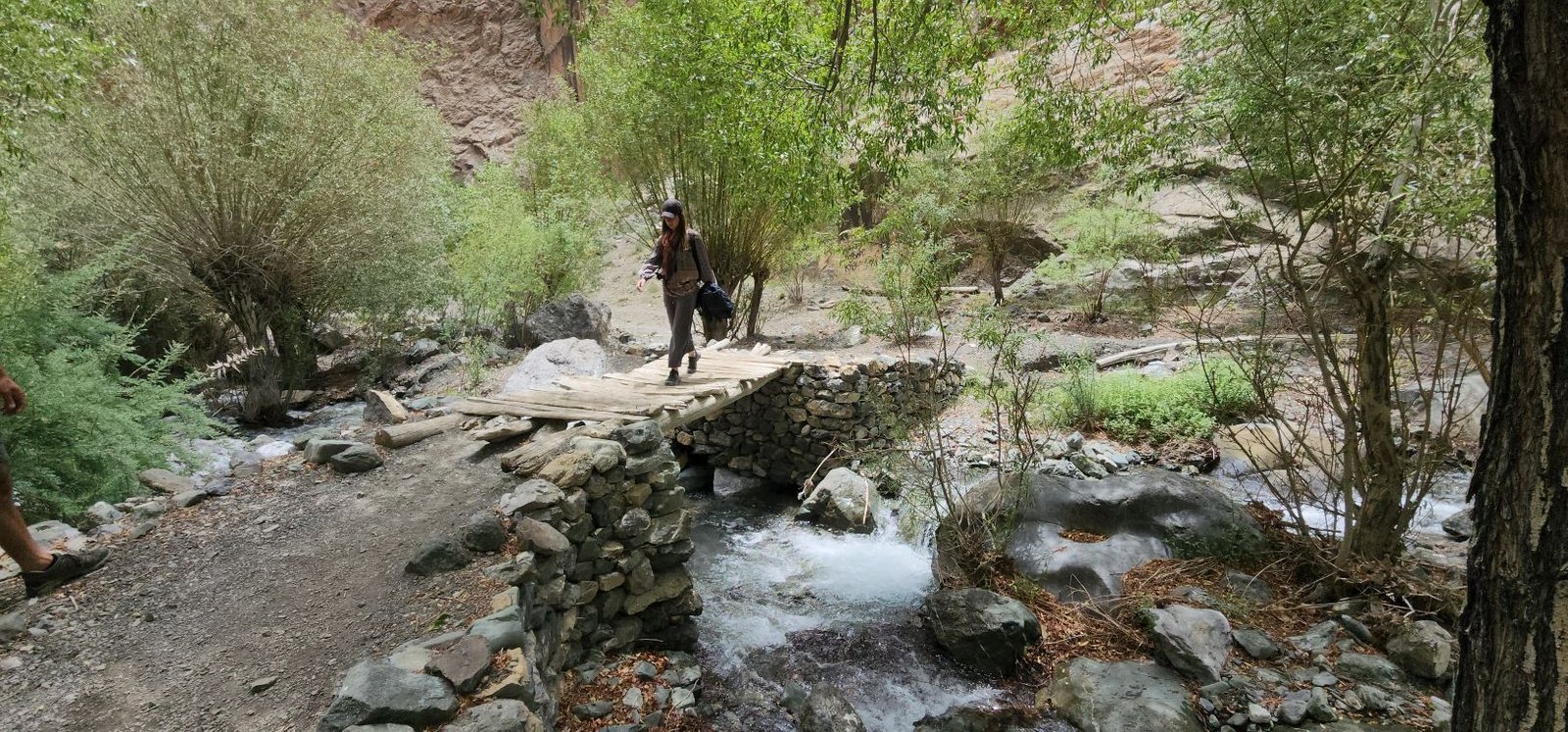
As we wandered through the village, elderly residents greeted us with warm smiles and a cheerful "Julley." We crossed lively mountain streams over simple wooden bridges, while every turn revealed another glimpse of a way of life deeply rooted in nature and tradition.
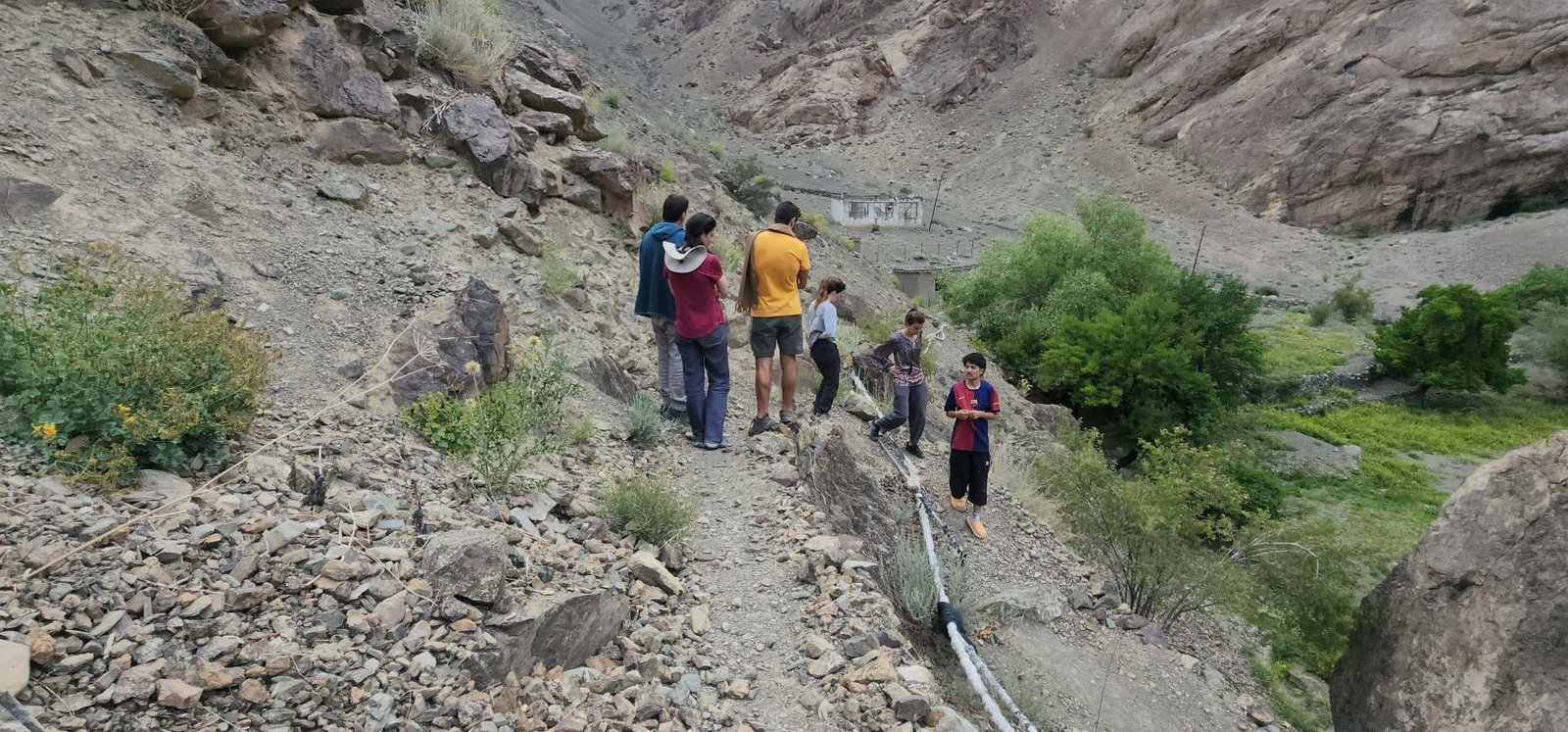
Urgain explained how every family contributes to planting, irrigating, and harvesting crops during the short summer season. Barley remains the village's most important crop, providing food, animal fodder, and even traditional beverages. Watching elderly villagers working alongside the younger generation was inspiring. Here, knowledge is not taught in classrooms—it is passed from one generation to the next.
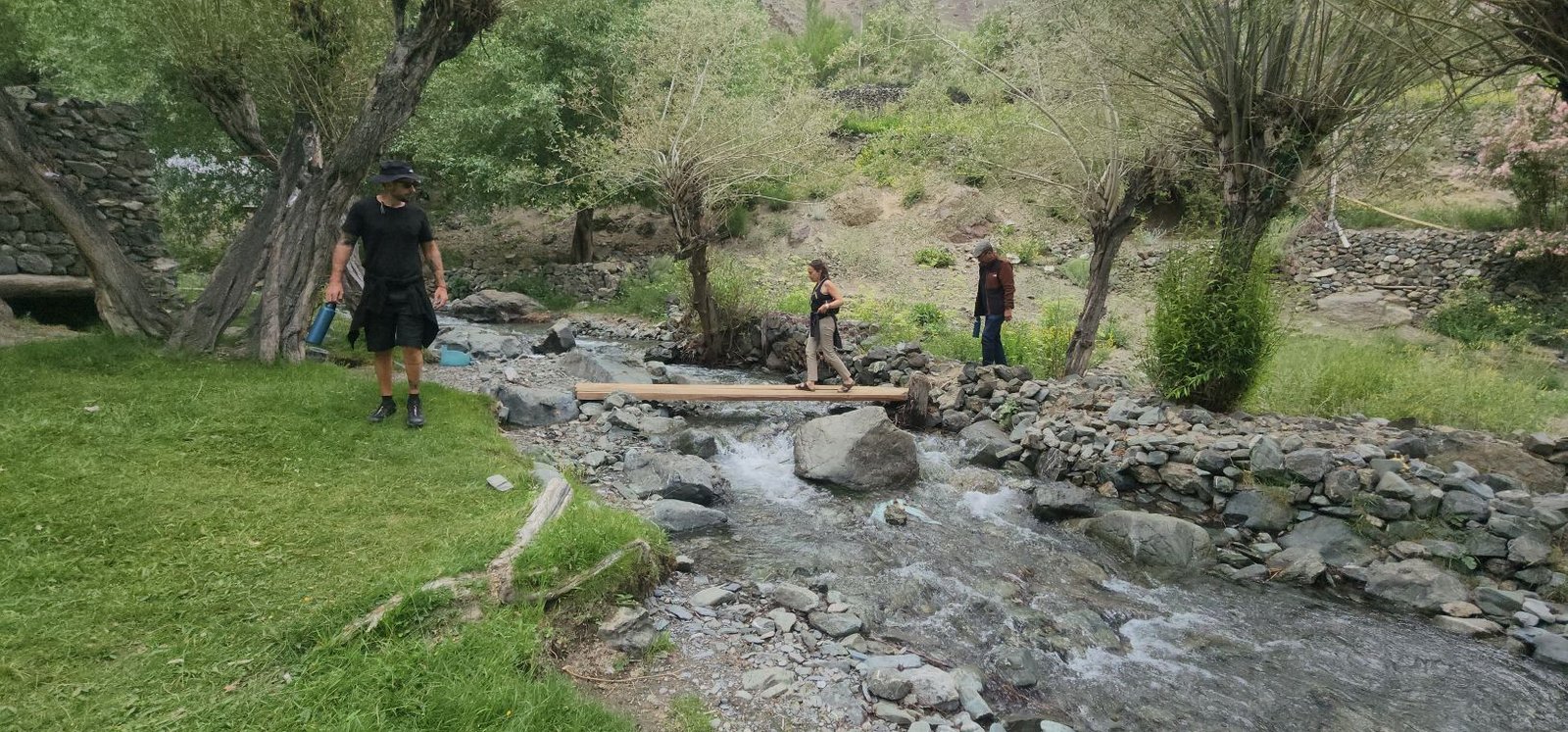
Our guests from Portugal were fascinated. Many admitted they had never visited a place where village life continued so naturally around visitors. No one performed for tourists or staged cultural experiences. Life simply carried on at its own peaceful pace.
That is what makes Tar Village so special. You don't just visit the village—you become part of its everyday life.
The Ancient Water-Powered Flour Mill
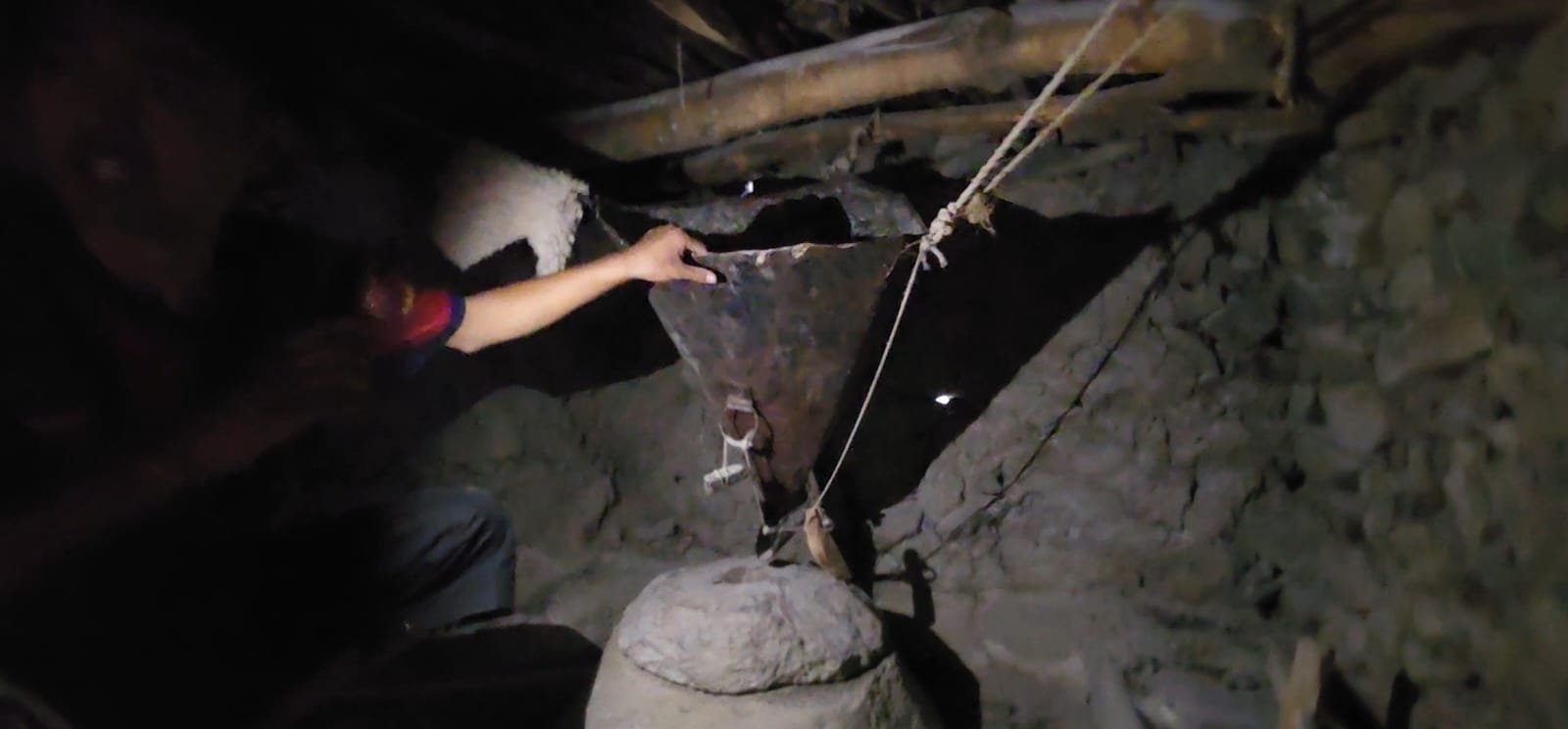
One of our first stops was the village's traditional flour mill, powered entirely by the force of flowing mountain water. Learning how the villagers have been grinding barley into flour without electricity or machinery was both fascinating and humbling. The steady turning of the wooden waterwheel reminded us that sustainable living is nothing new.
Long before the modern world began talking about renewable energy, communities like Tar had already mastered living in harmony with nature. Our guests stood quietly watching the mill at work, appreciating a technology that has served the village faithfully for generations.
Learning the Art of Traditional Apricot Oil Extraction
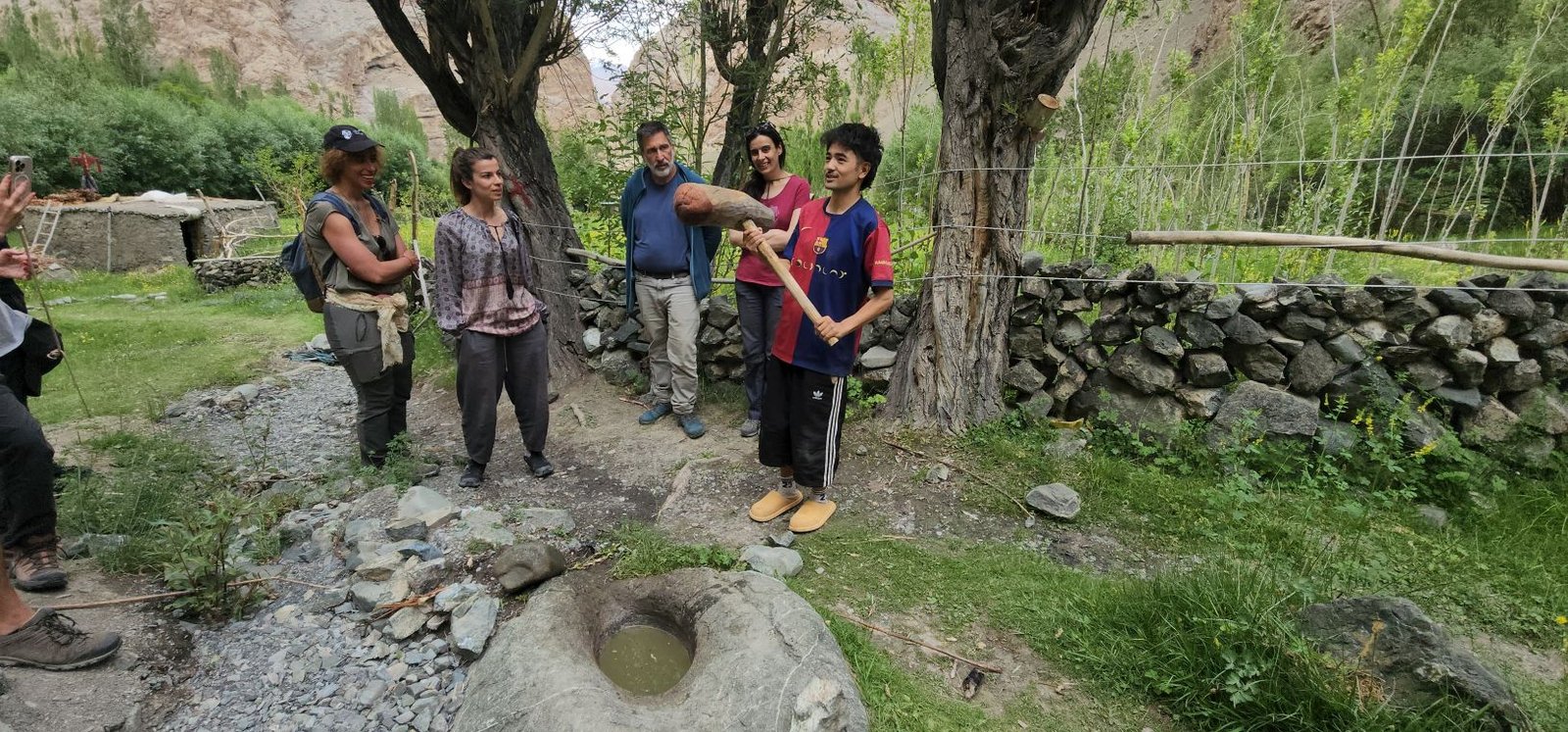
Another memorable stop was learning about extracting the apricot oil, in a traditional way where villagers continue to extract precious apricot seed oil using methods passed down from one generation to the next. After the apricots are harvested, the seeds are carefully collected, dried, and cracked open to remove the kernels. Using simple wooden tools and a heavy handcrafted wooden hammer, the kernels are slowly pressed to extract the rich golden oil.
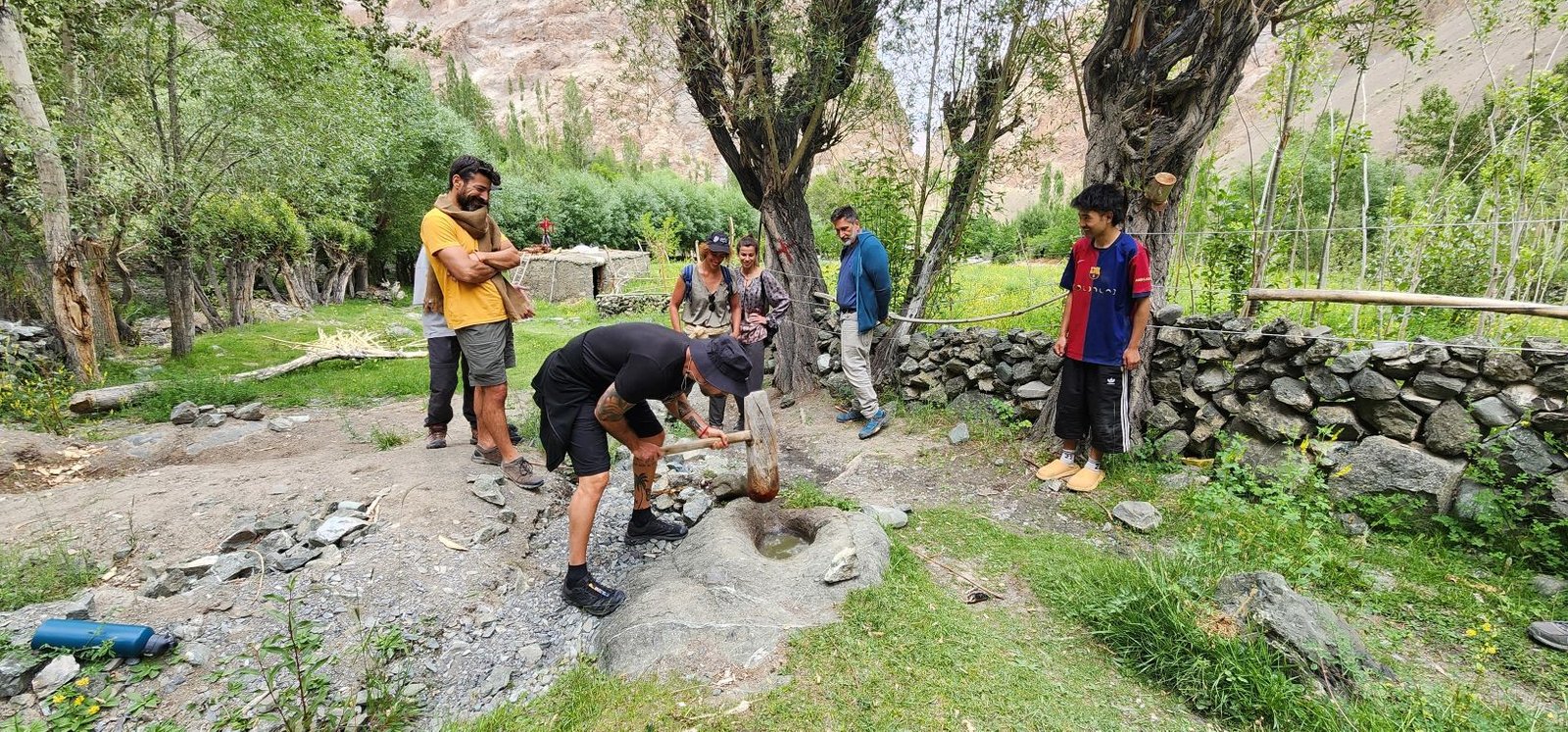
Nothing goes to waste. The oil is valued for cooking, skincare, and traditional medicine, while every part of the fruit is put to good use. For our guests, this was more than a demonstration—it was a lesson in sustainability. In Tar Village, using every available natural resource wisely is not a modern lifestyle choice; it has simply been the way of life for centuries.
The Village Monastery
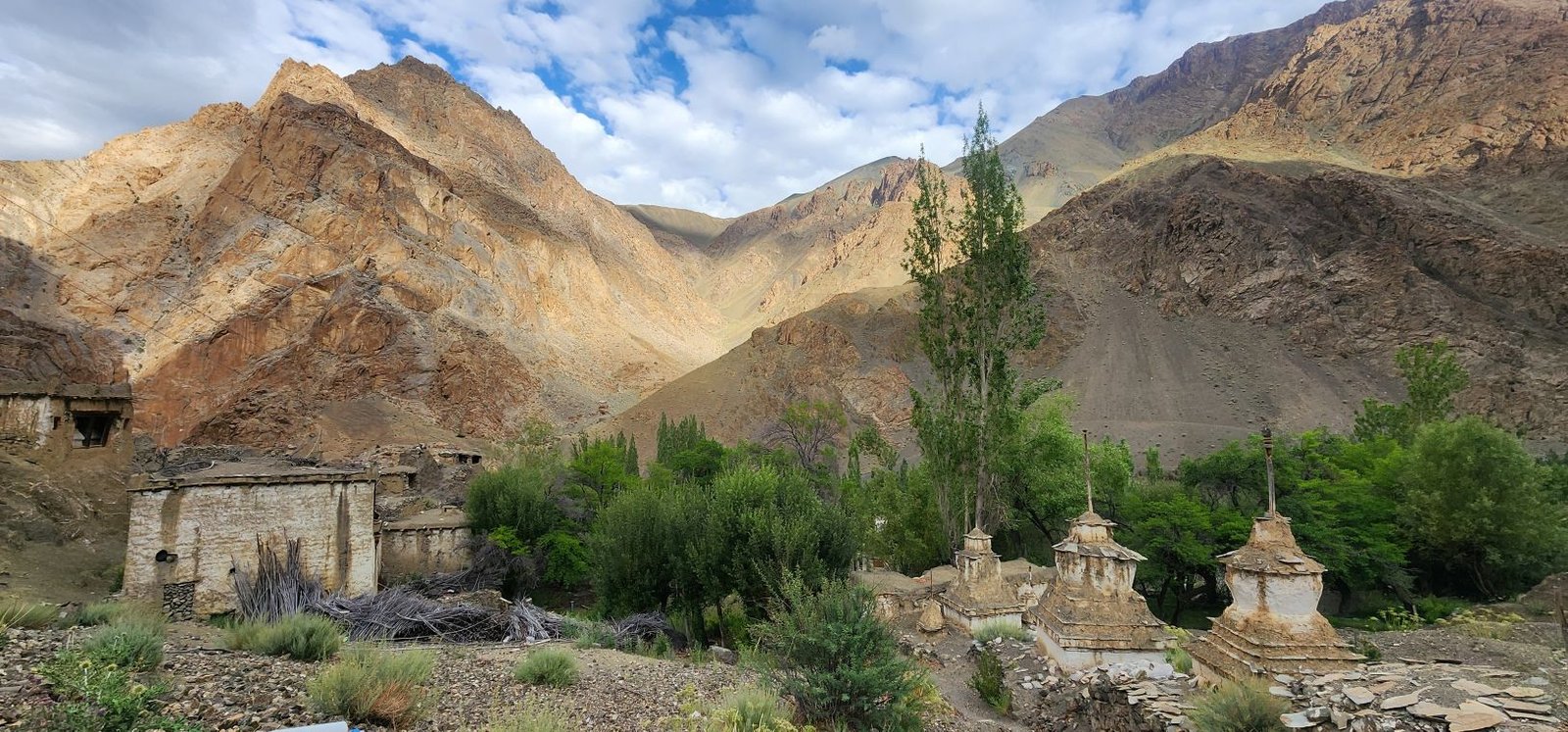
Our walk continued to the peaceful monastery overlooking Tar Village. Standing above the settlement, it offered breathtaking views across the valley, where colourful prayer flags swayed gently in the mountain breeze beneath the brilliant blue Ladakh sky. Inside, ancient murals, glowing butter lamps, sacred scriptures, and beautifully crafted Buddhist statues reflected centuries of spiritual devotion. More than a place of worship, the monastery remains the cultural and spiritual heart of the village, where important festivals, ceremonies, and community gatherings continue to bring people together.
In a rapidly changing world, places like this quietly preserve traditions that have shaped the identity of Tar Village for generations.
A Story That Lives On
As the afternoon drew to a close, our walk ended at the village community hall, where we watched a short documentary introducing the history, culture, and community-led tourism initiative of Tar Village.With the guided walk complete, everyone was free to explore the village at their own pace. Some wandered through the narrow lanes, others sat beside the flowing streams, while a few simply found a quiet spot to admire the surrounding mountains.
By then, Tar no longer felt like a destination on an itinerary. It felt like a place we had come to know through its people, its traditions, and its unhurried way of life.
Shopping That Supports Local Families- Responsible Tourism
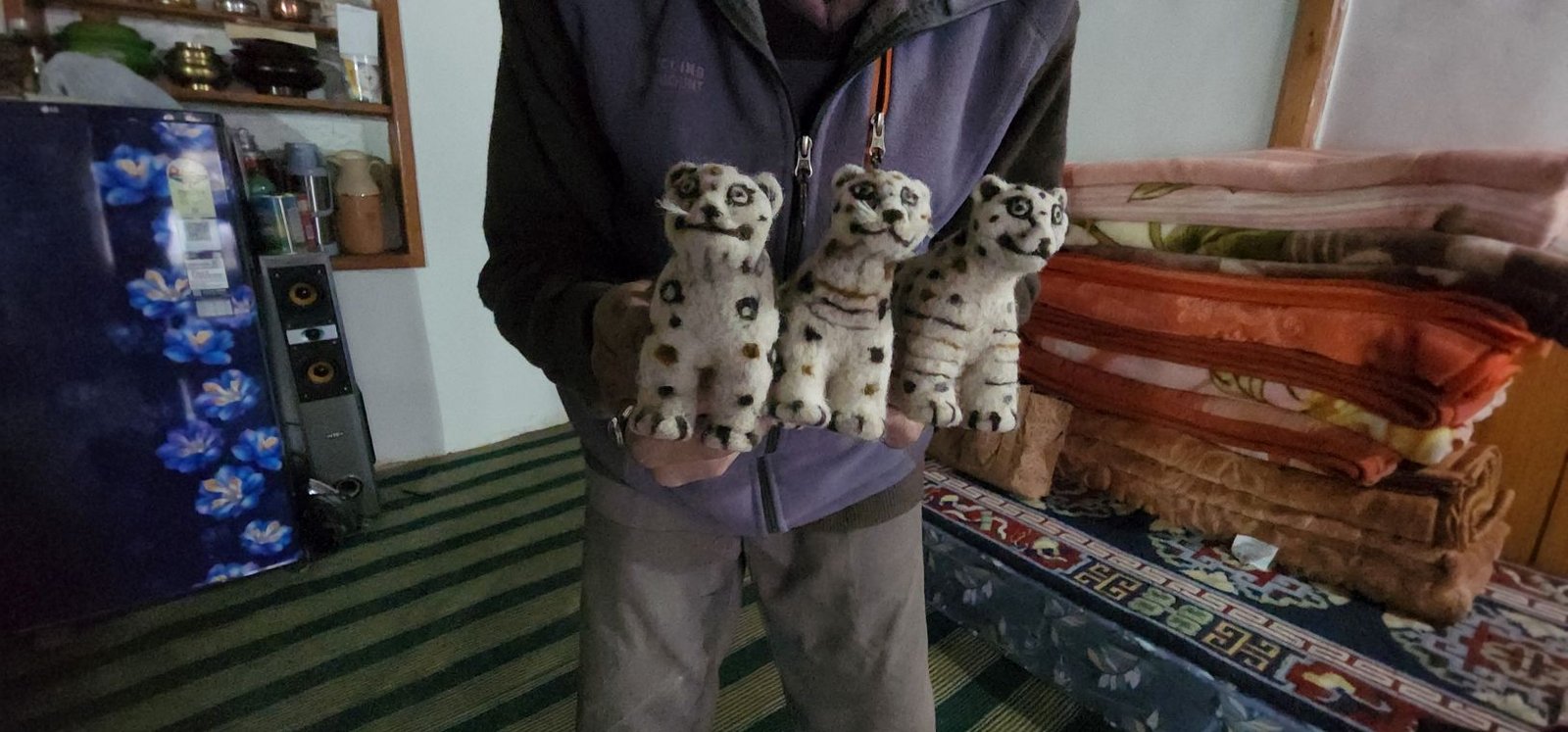
As we returned to our host families' homes, another delightful surprise awaited us. Our hosts proudly brought out a collection of beautiful handmade woollen products, carefully crafted from locally sourced sheep wool and yak wool. Beautiful socks, scarves, gloves, and traditional Ladakhi caps were neatly displayed. These were not factory-made souvenirs or mass-produced handicrafts. Every piece had been lovingly hand-knitted by the family during the long winter months, when heavy snowfall blankets the village and outdoor work comes to a halt.
Our hosts explained how the quiet winter season provides them with the time to spin, knit, and create these warm woollen products using skills passed down through generations. Many members of our group couldn't resist taking home these unique creations.
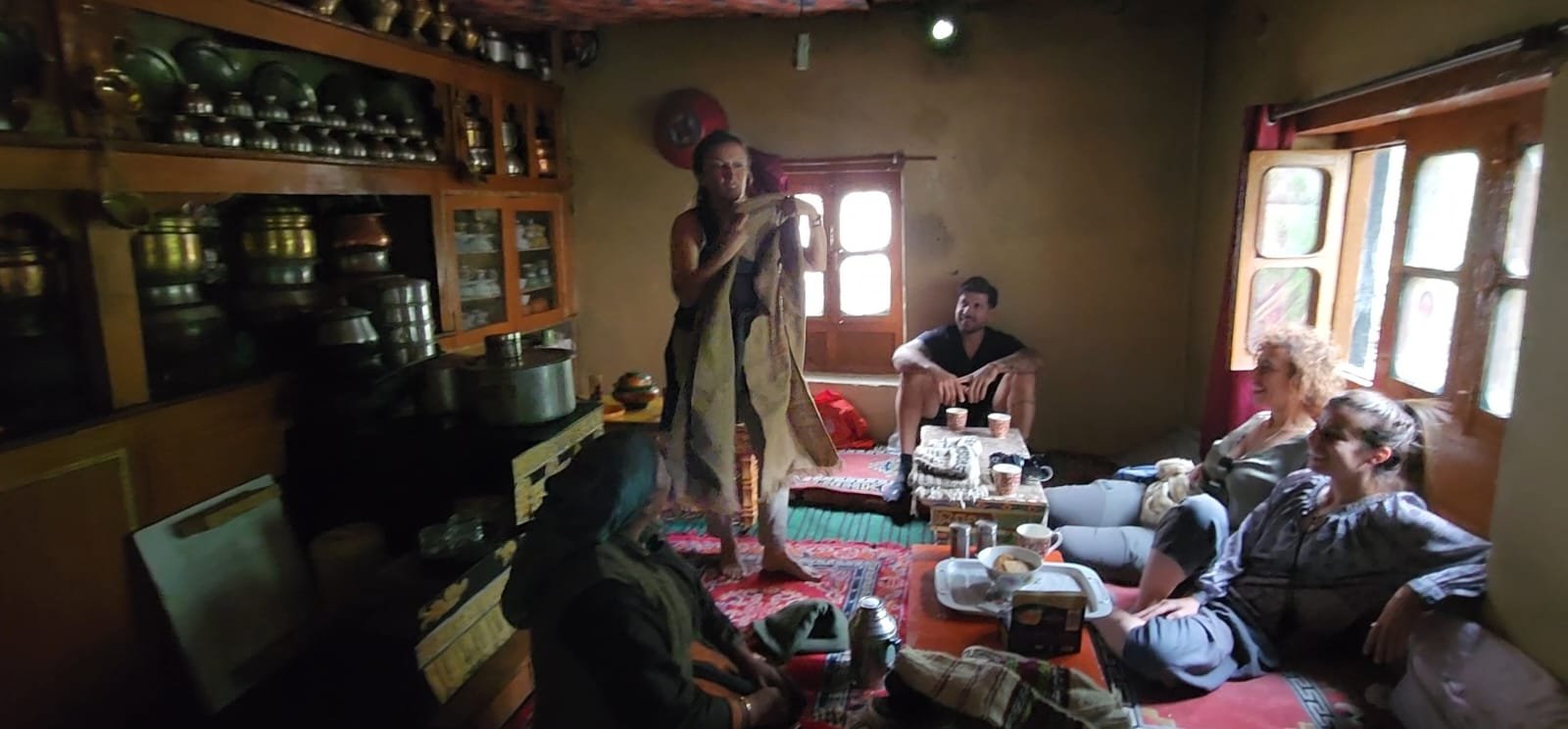
Knowing exactly who had made them—and having shared meals, conversations, and daily life with those very families—made every purchase deeply meaningful. Rather than buying souvenirs from a tourist shop, our guests were directly supporting the families who had welcomed them into their homes. It was a simple purchase, but one that helped preserve traditional craftsmanship while providing an additional source of income for the local community.
Responsible tourism begins with small choices. This was one of them.
An Evening That Felt Like Home
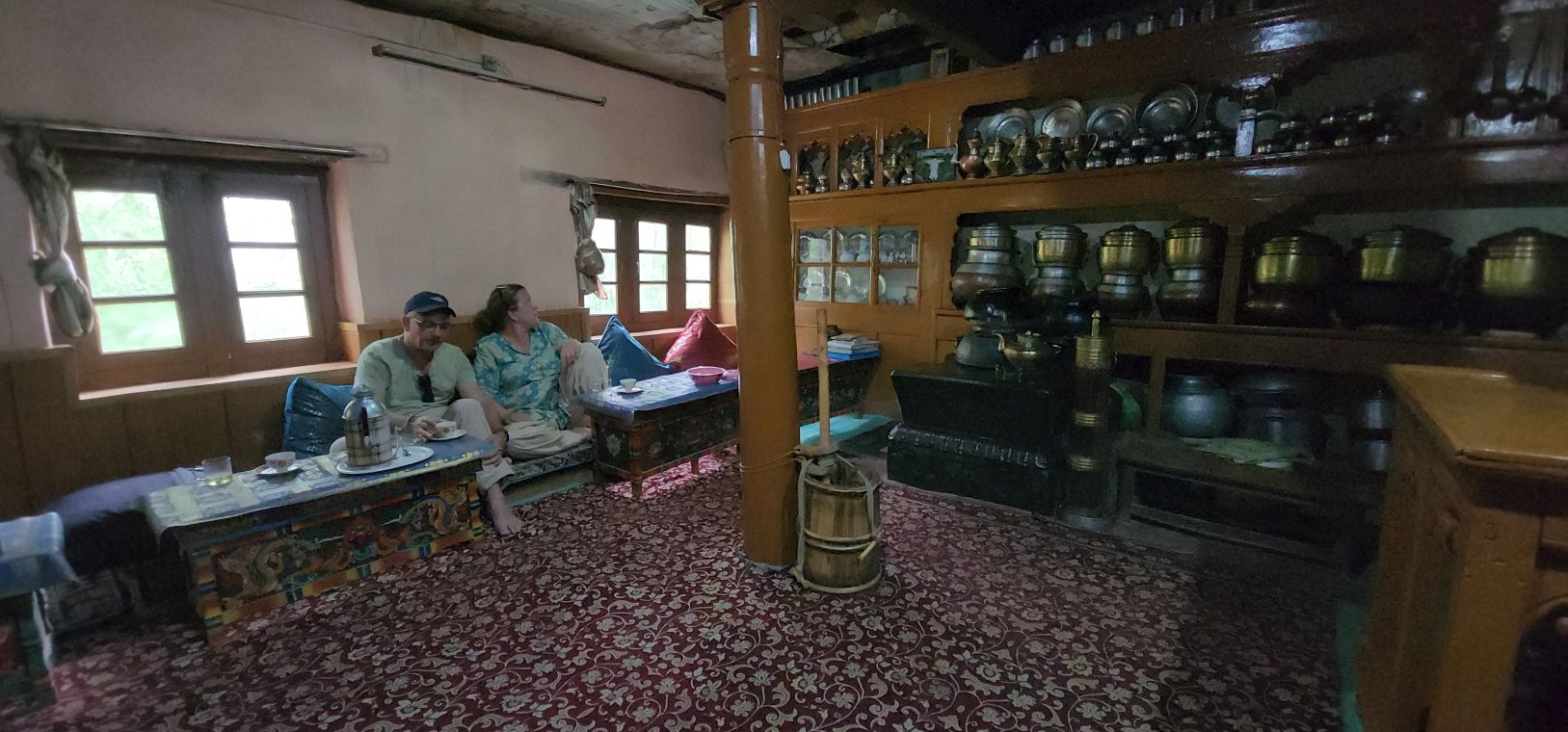
As the sun slowly disappeared behind the rugged mountains, a cool evening breeze swept across the barley fields and the temperature began to drop. One by one, villagers returned home after a day's work, and the inviting aroma of freshly cooked food drifted from the kitchens. Like every family in Tar Village, we gathered around the traditional kitchen, where the warmth of the stove brought everyone together. As dinner simmered gently, we sat chatting with our hosts, listening to stories about village life and simply enjoying the unhurried rhythm of the evening.
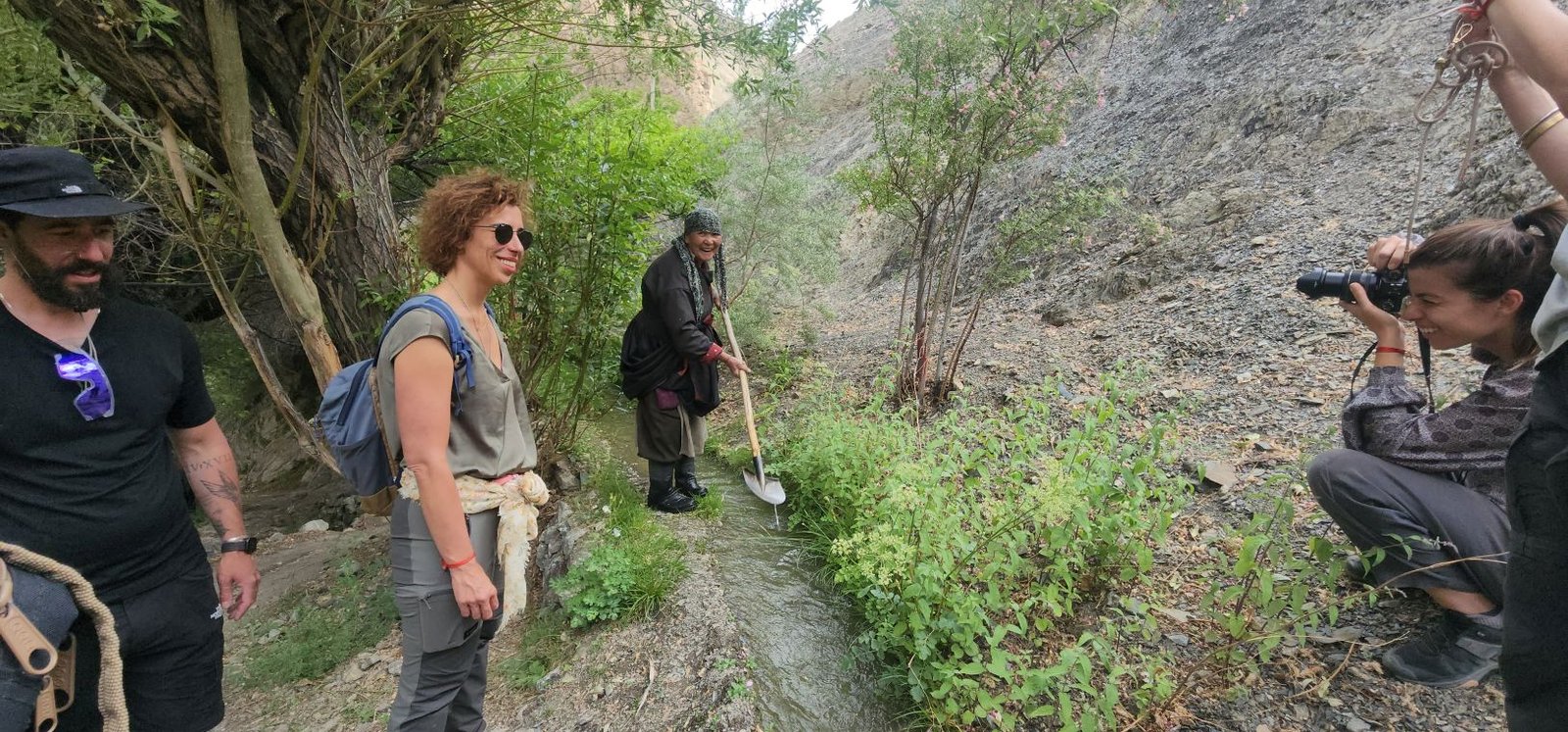
There was no traffic, no television, and no mobile phone signal demanding attention. Instead, the evening was filled with the comforting sounds of family conversations, and the peaceful rhythm of the nature and the village life. Although our group of ten was staying in different homes across the village, we all shared the same feeling—we were no longer tourists. We had become part of everyday life in Tar Village.
A Traditional Ladakhi Dinner with Our Host Family
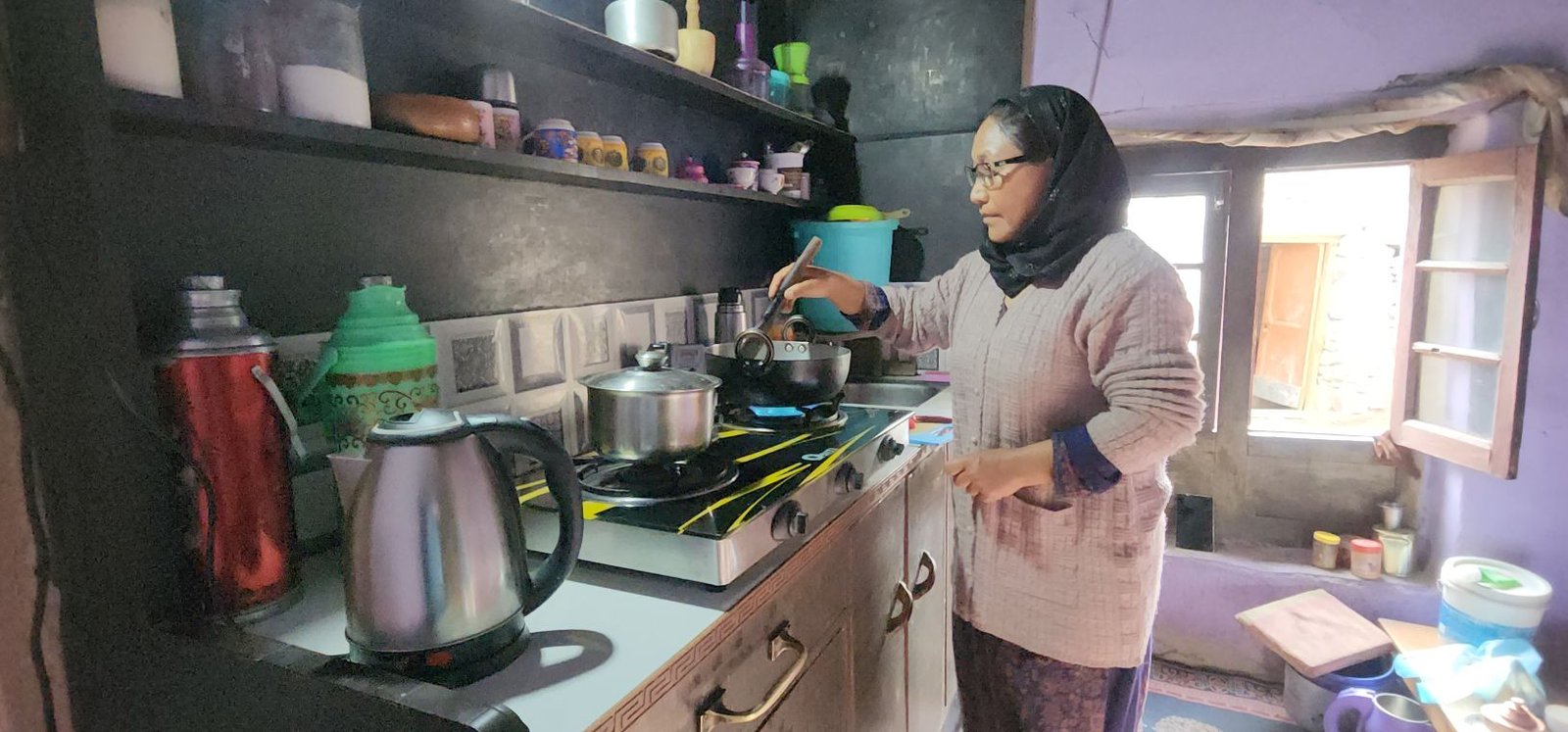
That evening, we gathered around the family dining area ( traditional kitchen) to enjoy a meal lovingly prepared by our hosts. I was staying with Dorjey's family, where his father was already busy preparing dinner in the traditional kitchen. Dorjey's father served us Chhutagi, one of Ladakh's most cherished traditional dishes. Made from hand-rolled pieces of wheat dough gently cooked in a rich vegetable broth, Chhutagi has warmed Ladakhi families through the long and bitter Himalayan winters for generations.
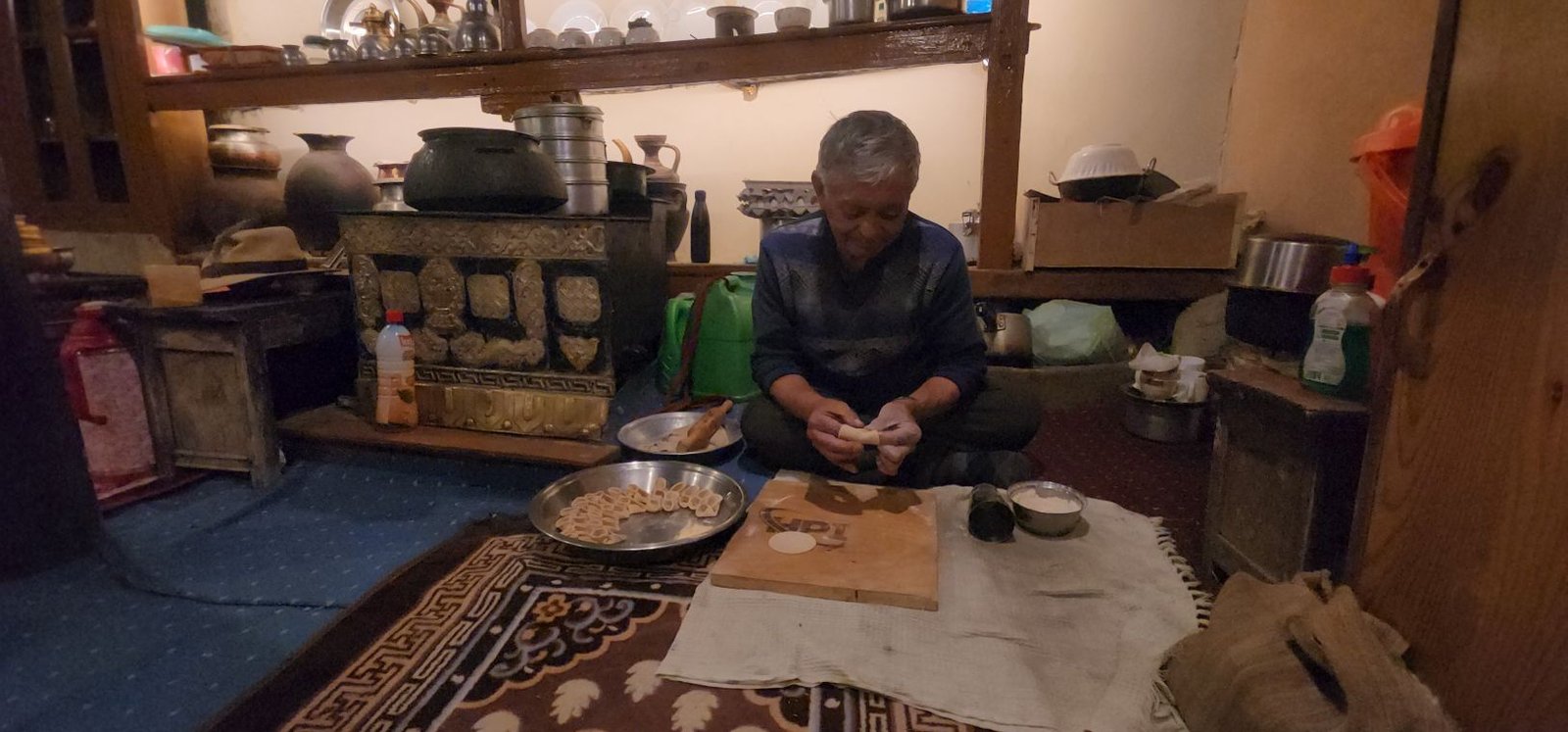
Alongside it came freshly steamed vegetable momos, homemade with locally grown ingredients. Every family has its own recipe, making each meal unique and deeply personal. The food was simple, wholesome, and incredibly satisfying, but what made the dinner truly memorable was the warmth with which it was served. Between shared smiles, laughter, and conversations, we learned about our hosts' lives, their traditions, and the challenges and joys of living in this remote Himalayan village.
Our hosts also invited us to taste their traditional homemade barley beer, brewed using age-old methods and enjoyed during festivals and family celebrations for generations. Those who wished to try it were offered a small glass, making it a wonderful opportunity to experience another cherished Ladakhi tradition. For everyone, it was a memorable taste of the village's rich cultural heritage.
A Sky Filled with a Million Stars
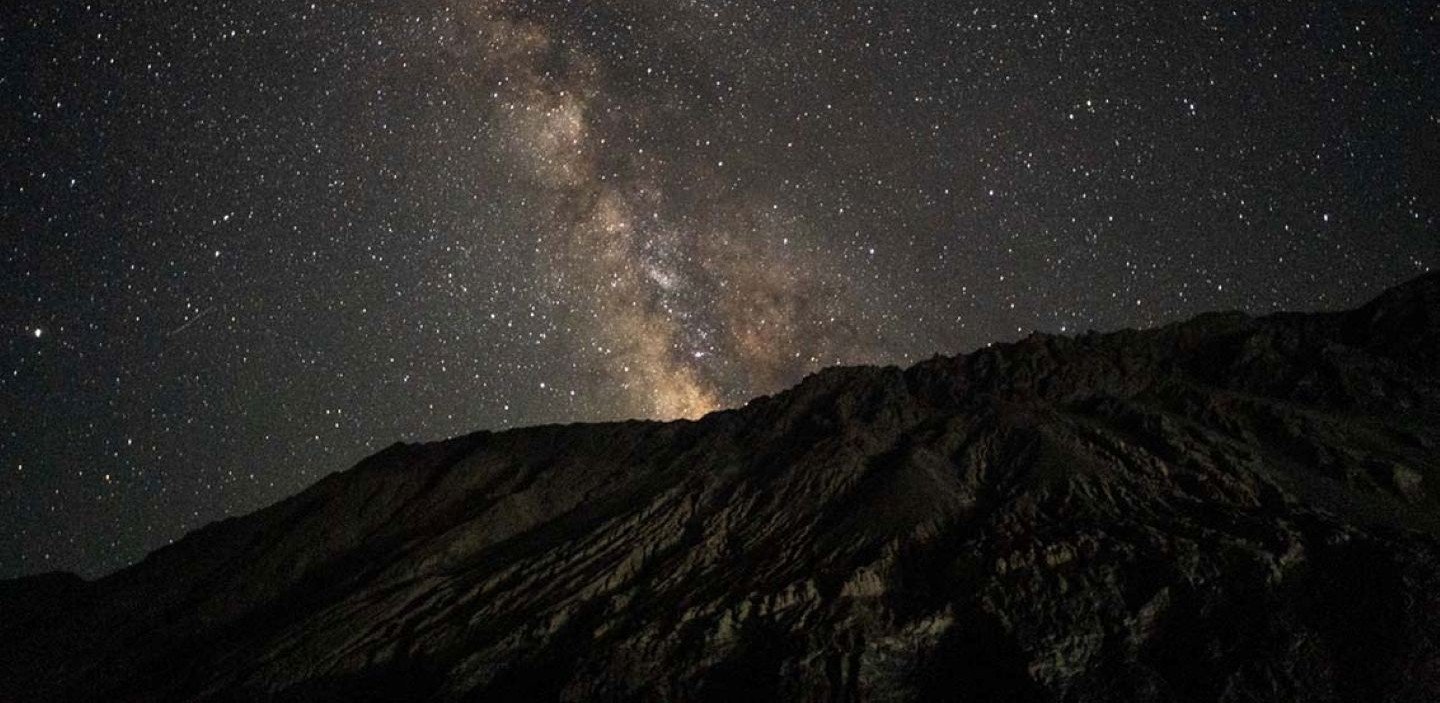
After dinner, I stepped outside. The village had fallen completely silent. There were only a few solar street lights, no vehicle headlights, and no city noise. The only sounds were the gentle murmur of the flowing stream and the occasional bark of a village dog. Looking up, the sky was filled with countless stars. The Milky Way stretched across the heavens with astonishing clarity. For many of our guests from Portugal, it was one of the clearest night skies they had ever witnessed.
Some simply sat outside their homes in silence, taking in the beauty above. Others tried their hand at astrophotography, while one guest was so captivated by the spectacle that he seriously considered sleeping under the stars rather than going indoors. Moments like these cannot be planned or scheduled. They simply happen, and they become the memories that stay with you long after the journey has ended.
A Traditional Ladakhi Morning
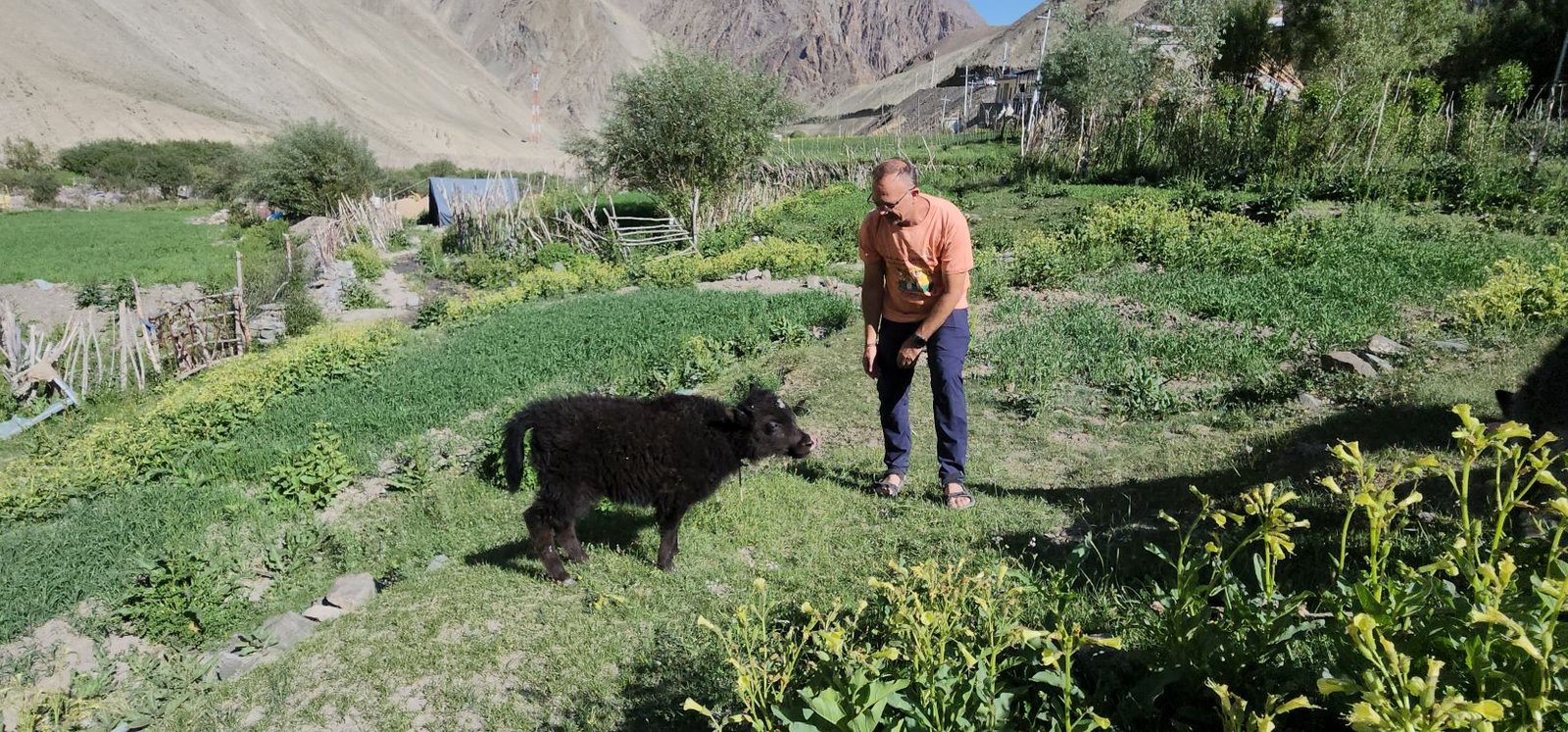
The next morning began with the cheerful sounds of village life. Sheep and goats slowly made their way towards the grazing fields. Breakfast was another opportunity to discover Ladakhi hospitality. Our hosts served freshly baked Khambir, the famous traditional Ladakhi bread with its slightly crisp crust and soft centre.
It was accompanied by homemade butter, jam and fluffy omelettes prepared using fresh eggs. Simple food. Fresh ingredients. Perfect mountain hospitality. Many of our guests admitted that it had been one of the most satisfying breakfasts of the entire tour.
Wildlife Beyond the Village
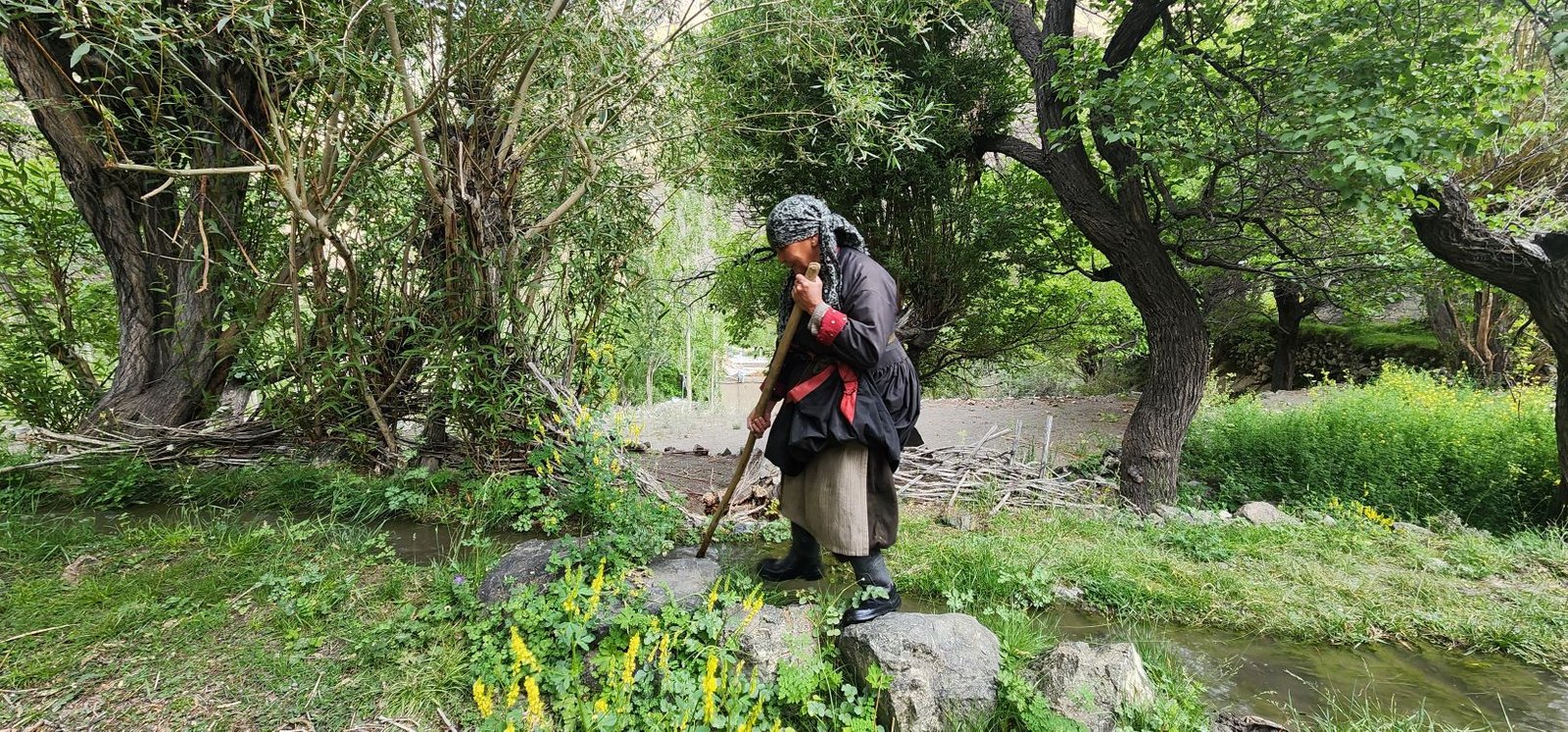
Although Tar is celebrated for its culture, nature lovers are equally rewarded. The surrounding mountains are home to remarkable Himalayan wildlife. Early morning and late evening are often the best times to spot Blue Sheep, gracefully navigating impossible-looking cliffs.
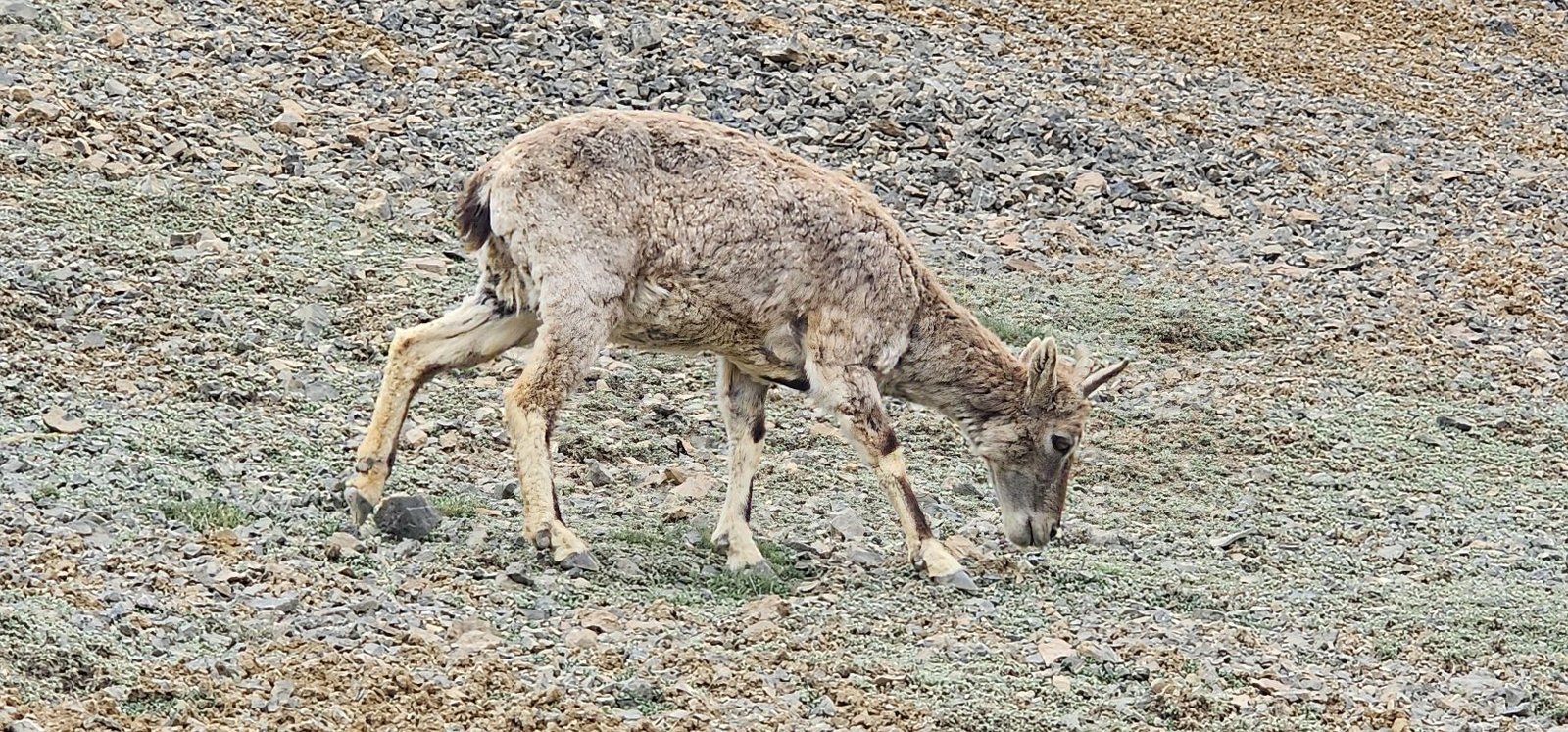
The majestic Himalayan Ibex, with its impressive curved horns, can occasionally be seen grazing on rocky slopes. Bird lovers will discover a paradise. Golden Eagles regularly soar high above the valley, while their enormous nests can often be spotted on inaccessible cliffs. Lammergeiers, Himalayan Griffons, choughs and numerous smaller mountain birds add life to the skies throughout the year.
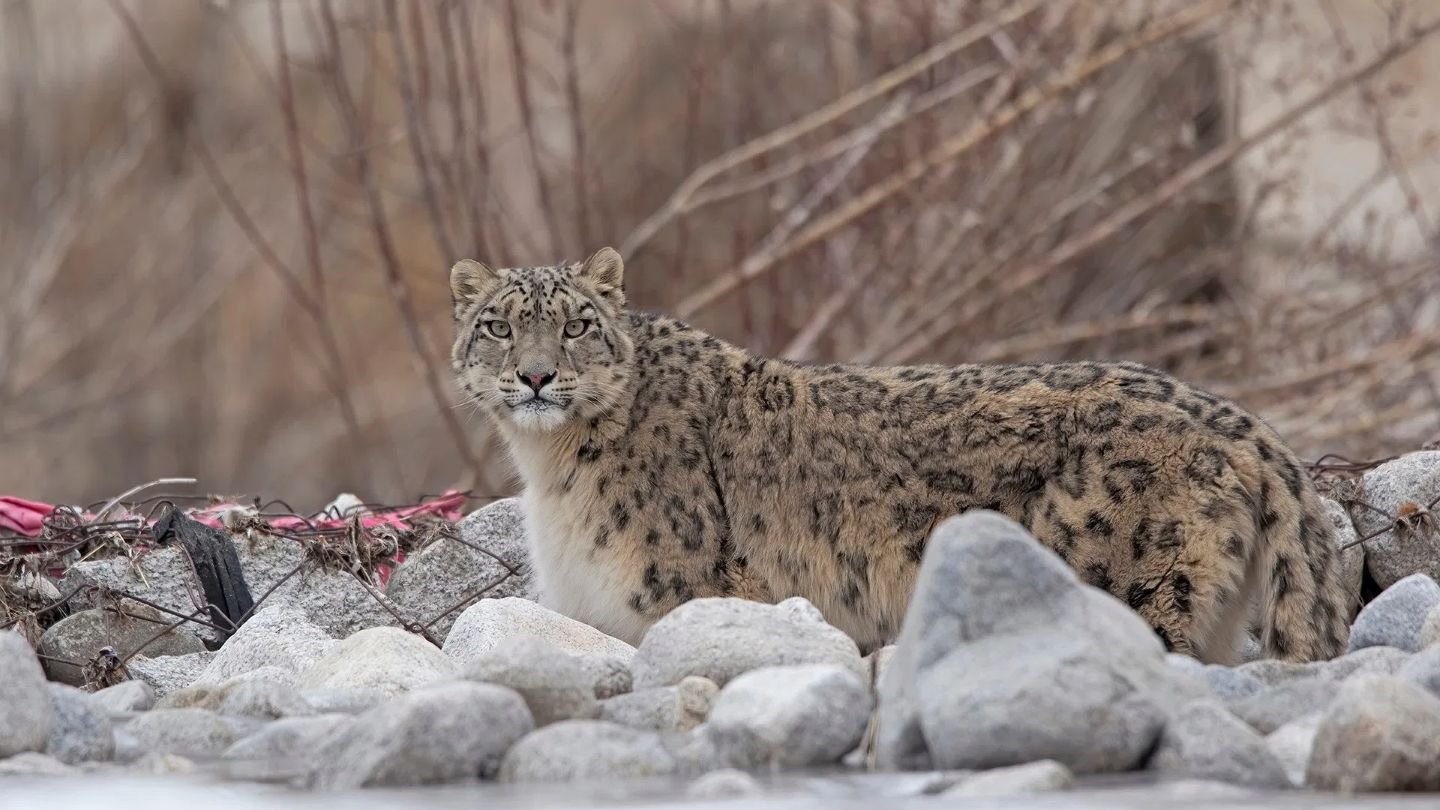
Winter brings another extraordinary possibility. Tar lies within one of the landscapes visited by the elusive Snow Leopard. Although sightings can never be guaranteed, knowing that this magnificent predator silently roams these mountains adds another layer of wonder to the experience. For wildlife photographers and nature enthusiasts, Tar offers opportunities that few destinations can match.
Why Tar Village Won India's Responsible Tourism Award
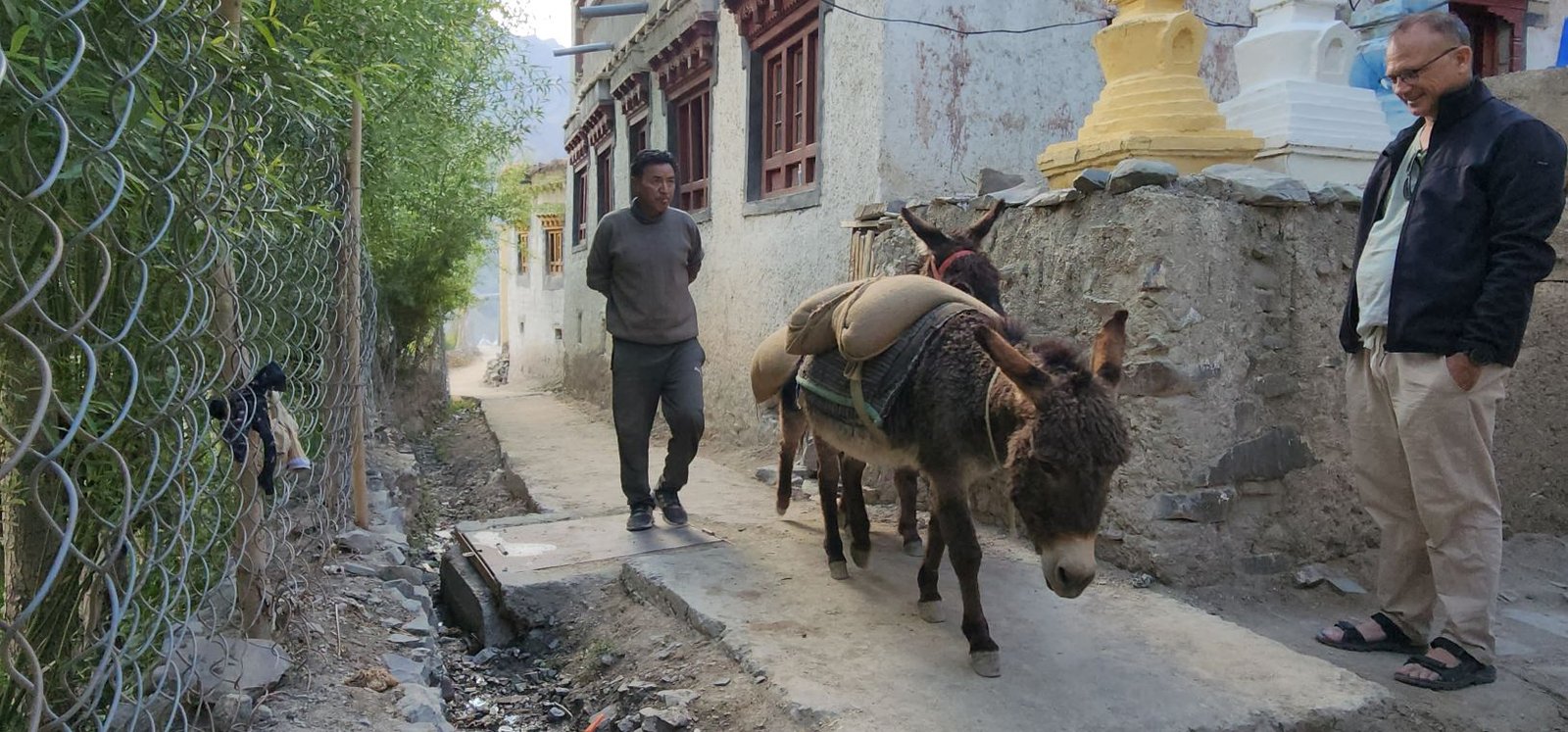
As I wandered through Tar Village once again, I found myself reflecting on what makes this small Himalayan community so extraordinary and why it was honoured with India's Responsible Tourism Award. The answer wasn't luxury accommodation or thrilling adventure activities. Nor was it the number of visitors the village attracts each year.
The answer lay in its people.
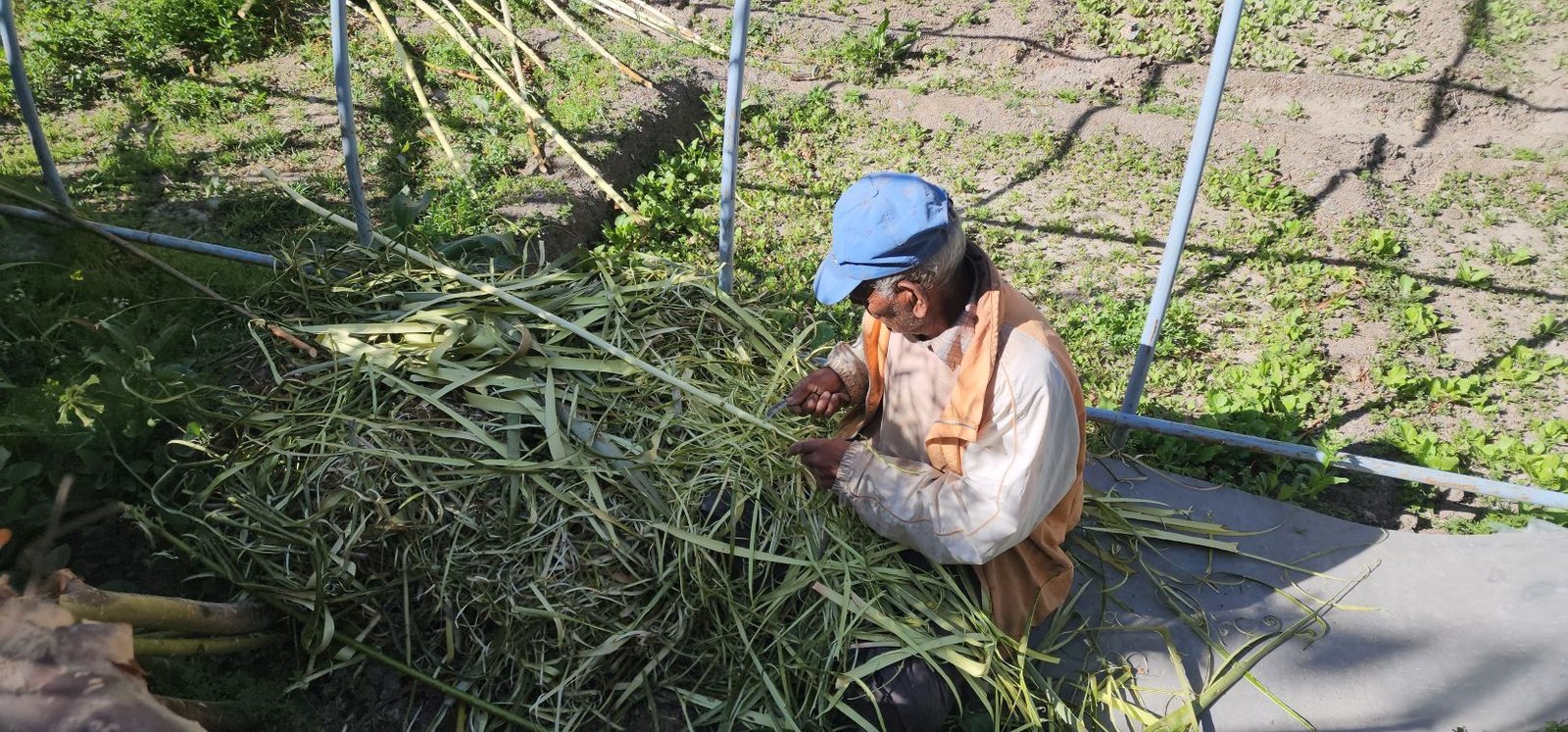
Tourism in Tar Village is owned and managed by the community itself. Visitors stay with local families rather than in commercial hotels, creating a direct source of income for the villagers. Traditional farming continues, local customs are celebrated, centuries-old architecture is carefully preserved, and the natural environment is treated with the respect it deserves.
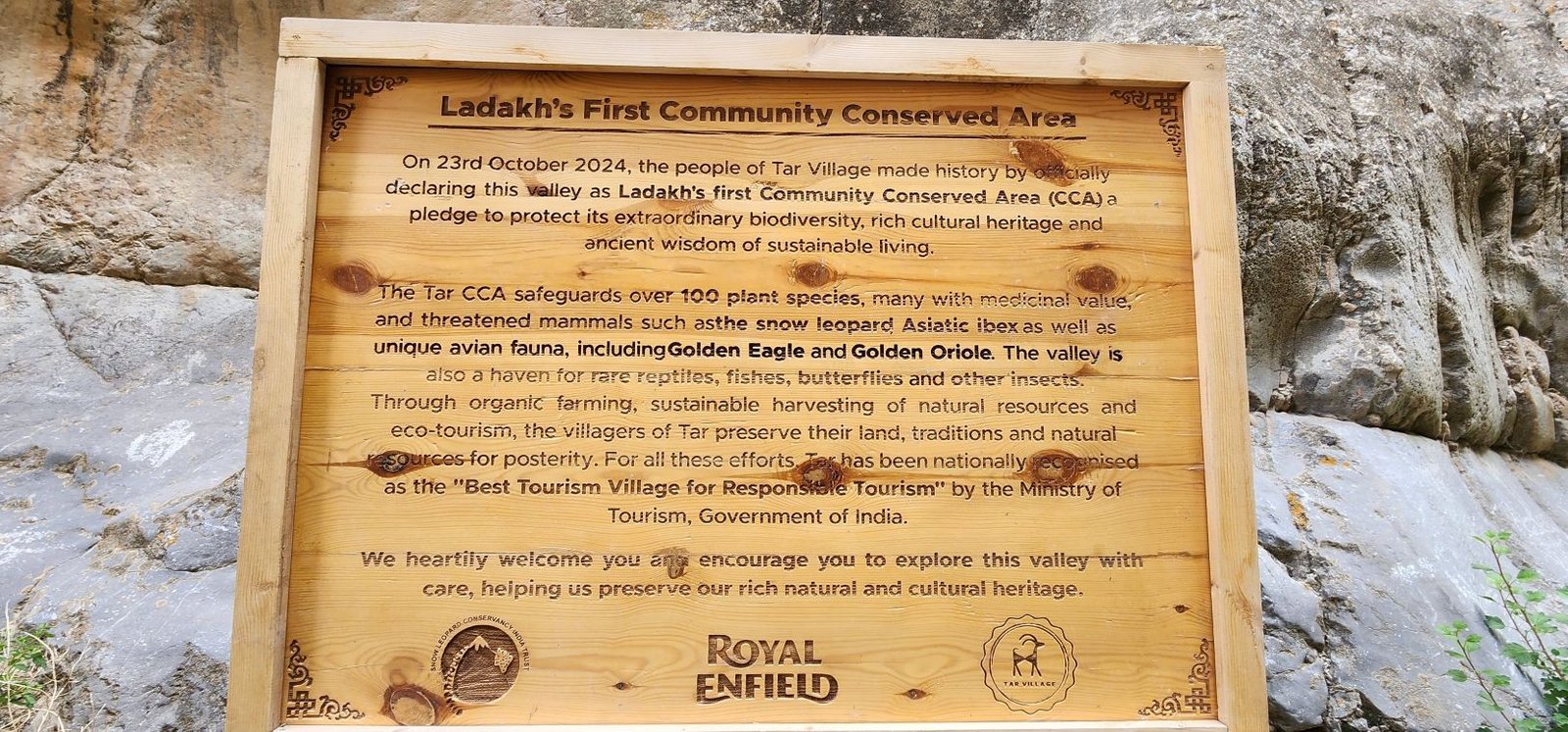
Rather than changing the village to meet the expectations of tourists, Tar invites travellers to experience life exactly as it is—simple, authentic, and deeply rooted in tradition. In a world where many destinations are changing to satisfy tourism, Tar Village has succeeded by staying true to itself. That is what makes it so special, and that is the true essence of responsible tourism. That philosophy is incredibly rare in today's world.
The Heart Behind the Experience
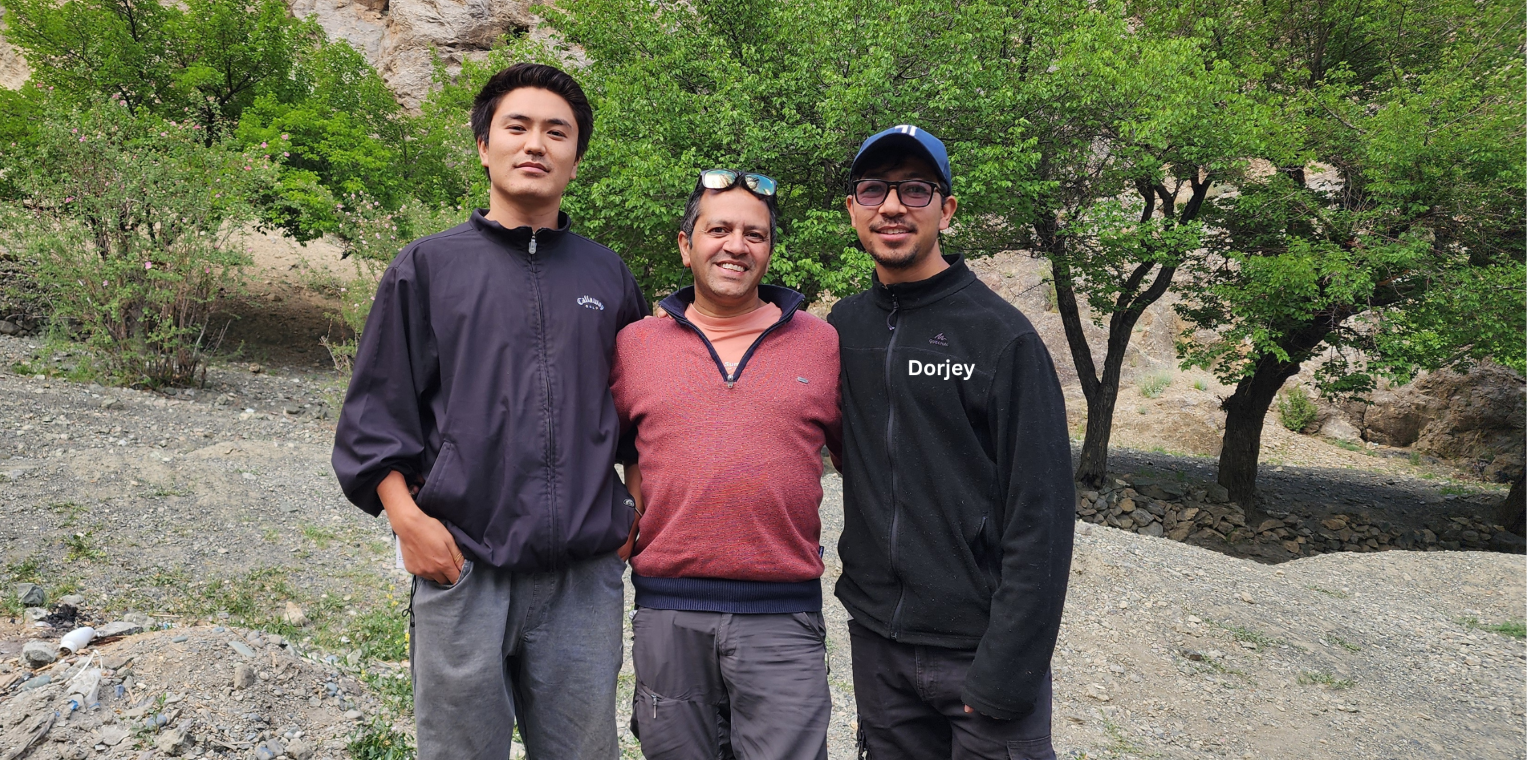
Every successful community tourism initiative needs dedicated local leadership. In Tar Village, that person is Dorjey, the village homestay coordinator. Working closely with local families, he ensures that visitors are welcomed warmly and that tourism benefits are shared fairly throughout the community. His passion for preserving Tar's heritage while creating sustainable opportunities for local families is inspiring.
Dorjey is supported by many young people from Tar Village who, despite working or studying away from home, remain deeply connected to their roots. Some are employed in government services or private jobs in Leh and other parts of Ladakh, while others are pursuing higher education in different parts of India. Whenever they return to the village, they willingly contribute their time, skills, and ideas to help strengthen this community-based tourism initiative and preserve Tar's unique cultural heritage for future generations.
Thanks to this community effort, every guest leaves with wonderful memories, and every family benefits from responsible tourism.
Farewell to Tar Village – More Than A Destination
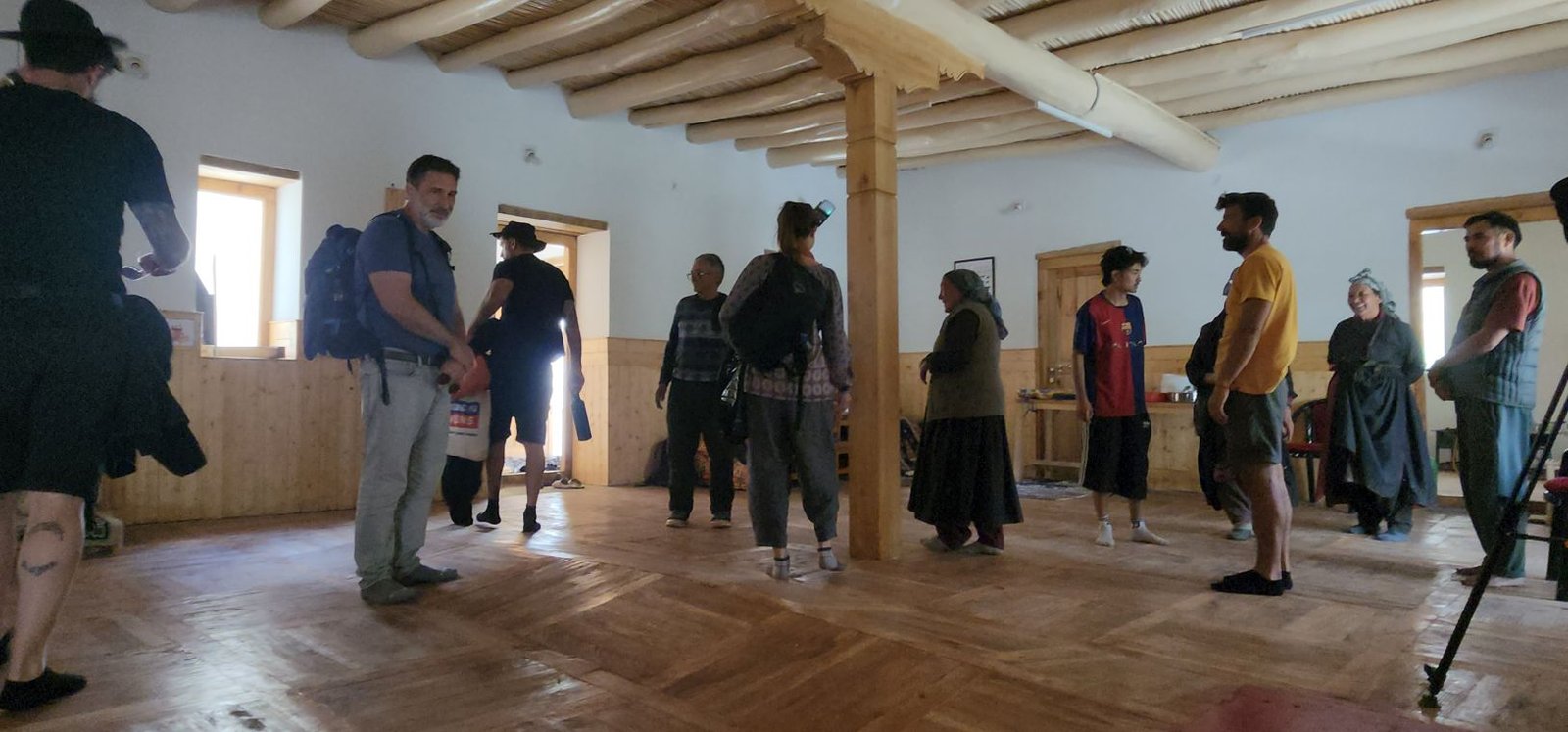
The next morning, it was time to say goodbye. As we prepared to leave, our host families gathered to bid us farewell. There were warm smiles, heartfelt handshakes, and a few emotional hugs. In just one night, strangers had become friends, and many of our guests promised they would return to Tar Village one day.
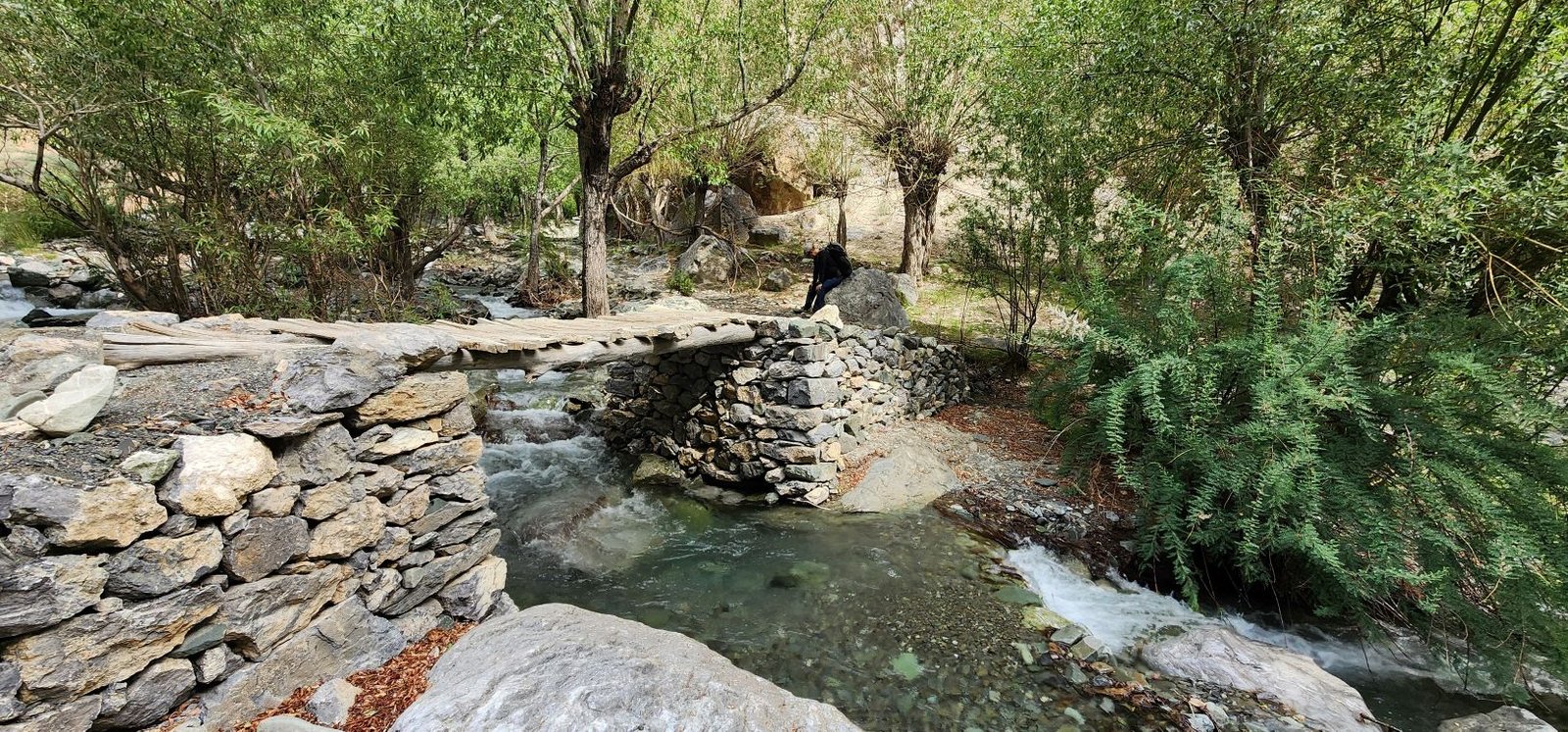
With our backpacks on our shoulders, we began walking back downhill, along the same mountain trail that had brought us into the village. This time, however, it felt different. We were not leaving a destination—we were leaving people who had welcomed us into their homes and shared a glimpse of their lives with us.
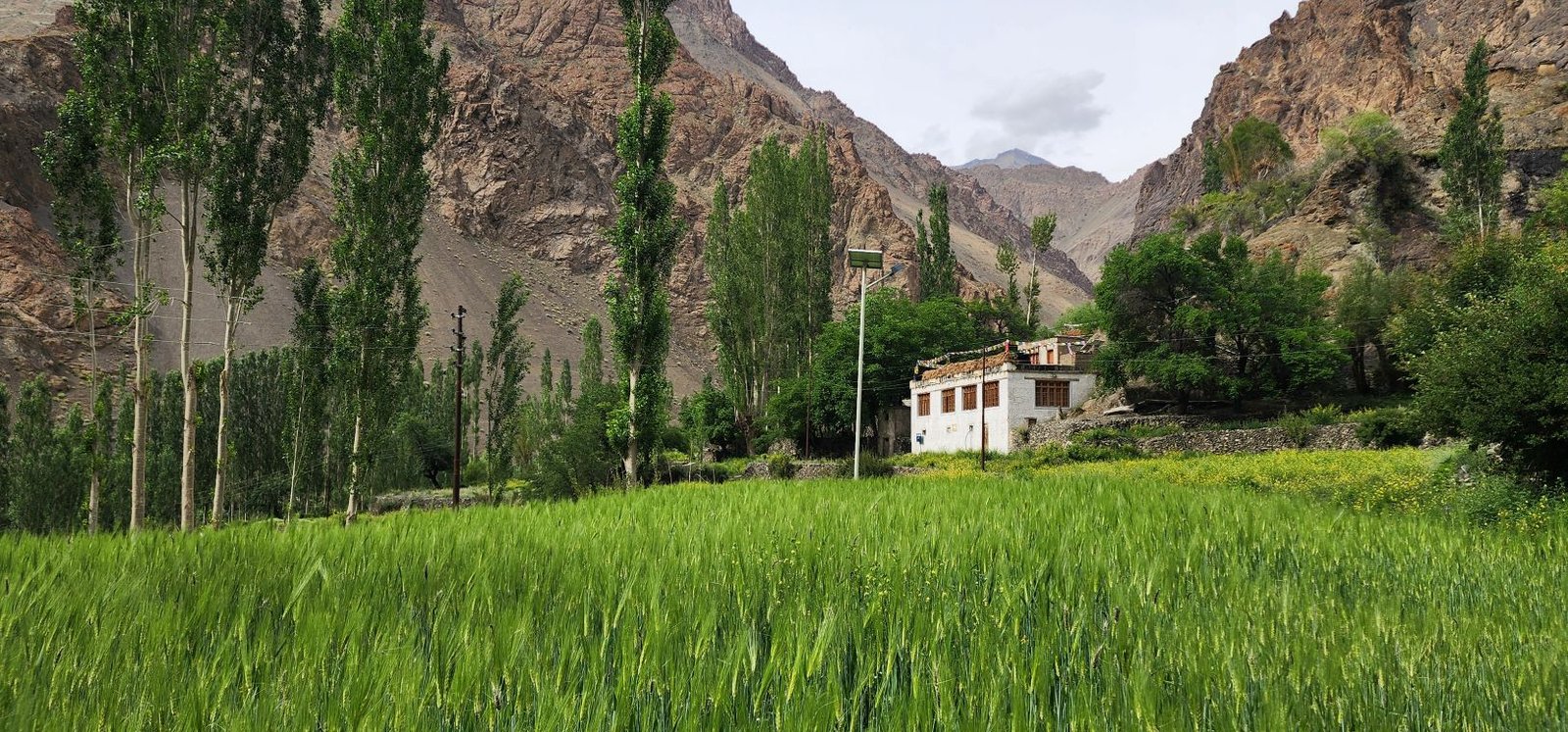
I paused for one last look. The stone houses slowly disappeared behind the mountain gorge, and the colourful prayer flags became tiny splashes of colour against the vast Himalayan landscape. Within minutes, Tar Village had vanished from sight, but the memories we carried with us would remain long after the journey had ended.
Places like Tar remind us that the true meaning of travel is not measured by the number of destinations we visit. It is found in the people we meet, the stories we share, and the moments that cannot be planned or purchased. Tar Village gave us far more than beautiful scenery. It reminded us to slow down, to appreciate life's simple pleasures, and to understand a culture by living it, even if only for a short while.
Some journeys end when you leave a place. Others stay with you forever. Tar Village is one of those places.
Planning Your Visit to Tar Village
If you're looking beyond the usual tourist circuit and wish to experience the real Ladakh, Tar Village deserves a place on your itinerary. Whether you're passionate about culture, photography, birdwatching, wildlife, village life, responsible tourism or simply looking for peace and authenticity, Tar offers an unforgettable experience.
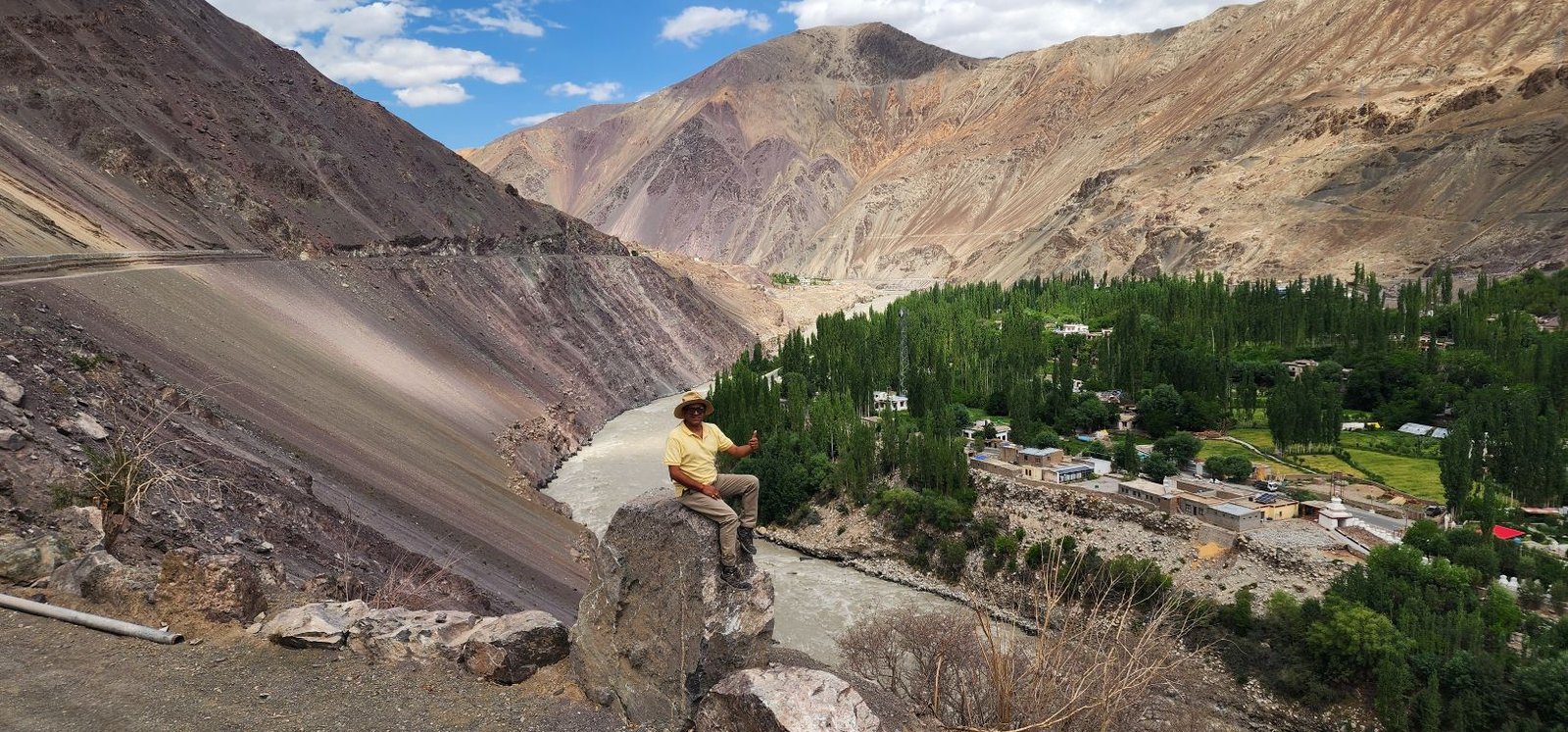
At Summit Safari India, we have been bringing travellers to Tar Village for many years as part of our immersive Ladakh journeys. We work closely with the local community to ensure that every visit directly benefits village families while offering our guests an authentic and meaningful travel experience. If you would like to experience one of India's most inspiring examples of responsible tourism, meet the warm-hearted people of Tar, enjoy traditional Ladakhi hospitality and discover a side of Ladakh that very few travellers ever see, we would be delighted to help you plan your journey.
For bookings and customised tours to Tar Village, Ladakh, contact:
Summit Safari India
Website : www.summitsafari.com
Email : travel@summitsafari.com
WhatsApp : +91 9805051102 and +91 9418647516
Sometimes the greatest journeys begin where the road ends. Tar Village is one of those rare places—and once you've experienced it, a part of you will always remain there.